Basketball Camp for High School Kids: Does HoopLife Have One?
Coordinators searching for a basketball camp for high school kids can bring HoopLife's two-day clinic to their gym instead of sending teens elsewhere.

- HoopLife's travel clinic has no age cap: it groups players by age and ability, so a high school gym works the same way a school of younger kids does.
- The standard clinic runs two full days, mixing coached skill work, scrimmages, fitness circuits and the Confidence, Leadership and Basketball IQ sessions.
- Coordinators only need to provide a gym with working hoops and one local point of contact; HoopLife brings the coaching team, curriculum and printed booklets.
- Pricing is never published as a flat number because distance, overnight stays, flights and number of days all change the quote; every community gets a written, itemized estimate.
- A longer visit than two days can be built and priced if a school or town coordinator asks for it up front.
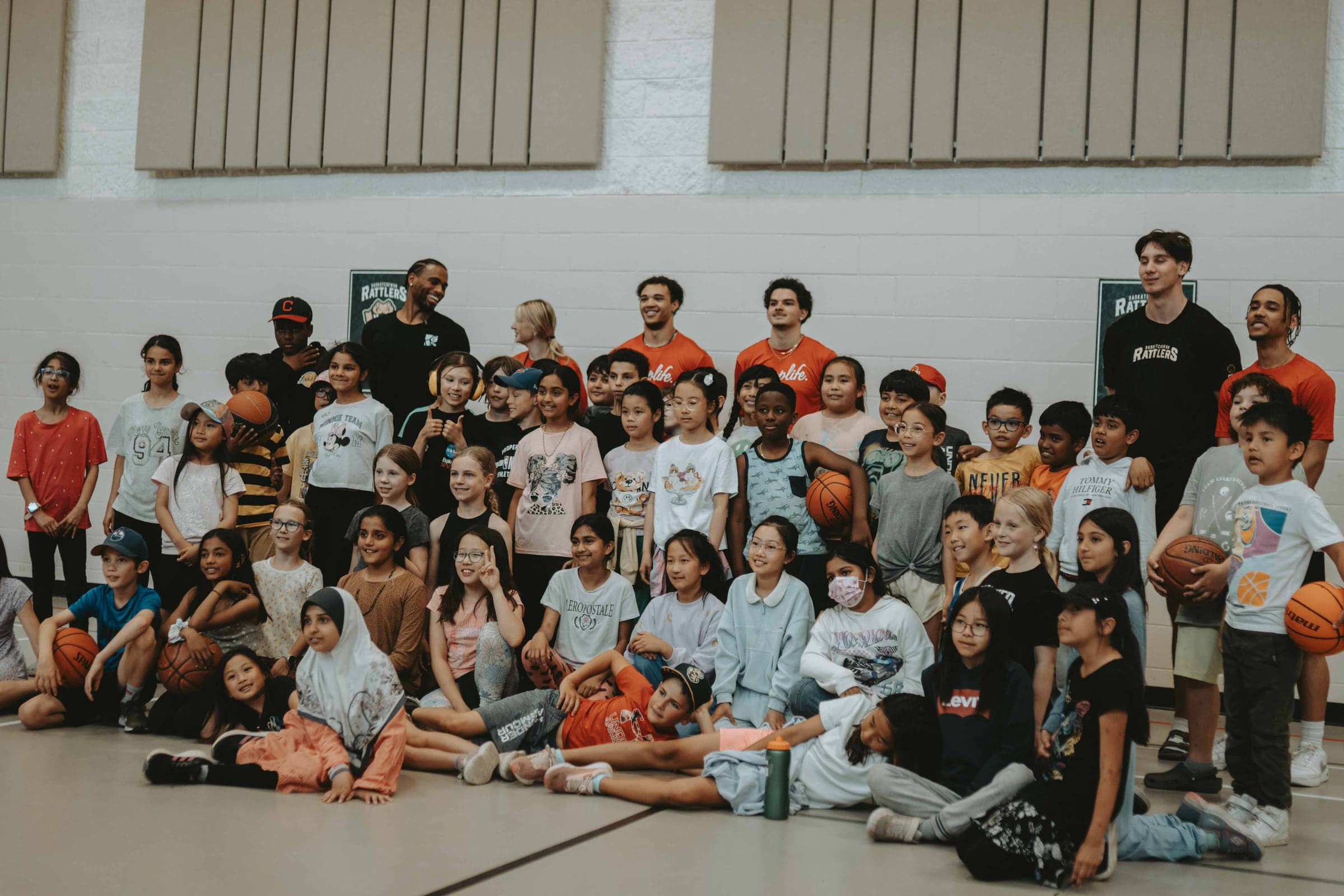
Yes. HoopLife's travel clinic is not built for one age band, it takes who comes, which means a high school group gets the same two full days as a group of ten-year-olds, just run at their level. A coordinator does not need to search for a separate "basketball camp for high school" program. The clinic HoopLife already runs for First Nations communities and small towns scales up to teenagers the same way it scales down to beginners: by grouping players by age and ability on the day, not by turning kids away at the door.
Does a HoopLife clinic actually work for teenagers, or is it built for younger kids?
It works for both, because the format is built around ability groups, not one fixed age. HoopLife's own clinic pages say plainly that there is no hard cap and no age cut-off: "we take who comes," and in a lot of communities that means most of the school shows up on the same two days. A coordinator planning for a high school group tells HoopLife roughly how many teens to expect and what their experience level looks like, and the coaching team plans the sessions around that group specifically. A gym full of grade 9 to 12 players who have played club ball for years gets a different two days than a gym full of kids who have never touched a basketball, even though both are the same clinic format.
That matters for schools and towns because a lot of the search traffic looking for "basketball camp for high school boys" or "basketball camp for high school girls" assumes they need a specialized outside program. They do not. The same two-day structure, run on HoopLife's town and city clinic page, covers a high school gym class, a school team, or a whole high school's worth of interested students, grouped by ability once the coaches see everyone play.
What actually happens over the two days?
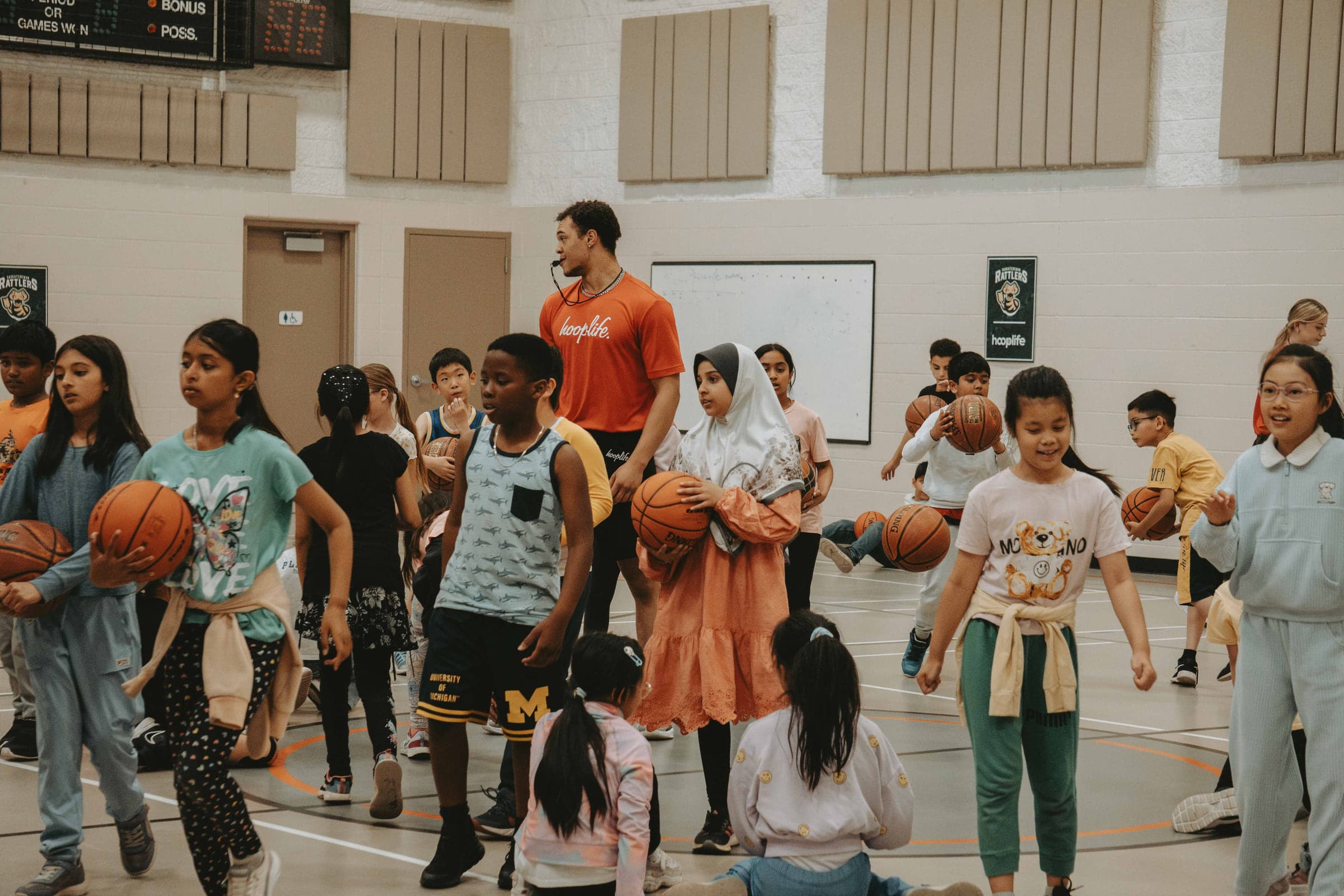
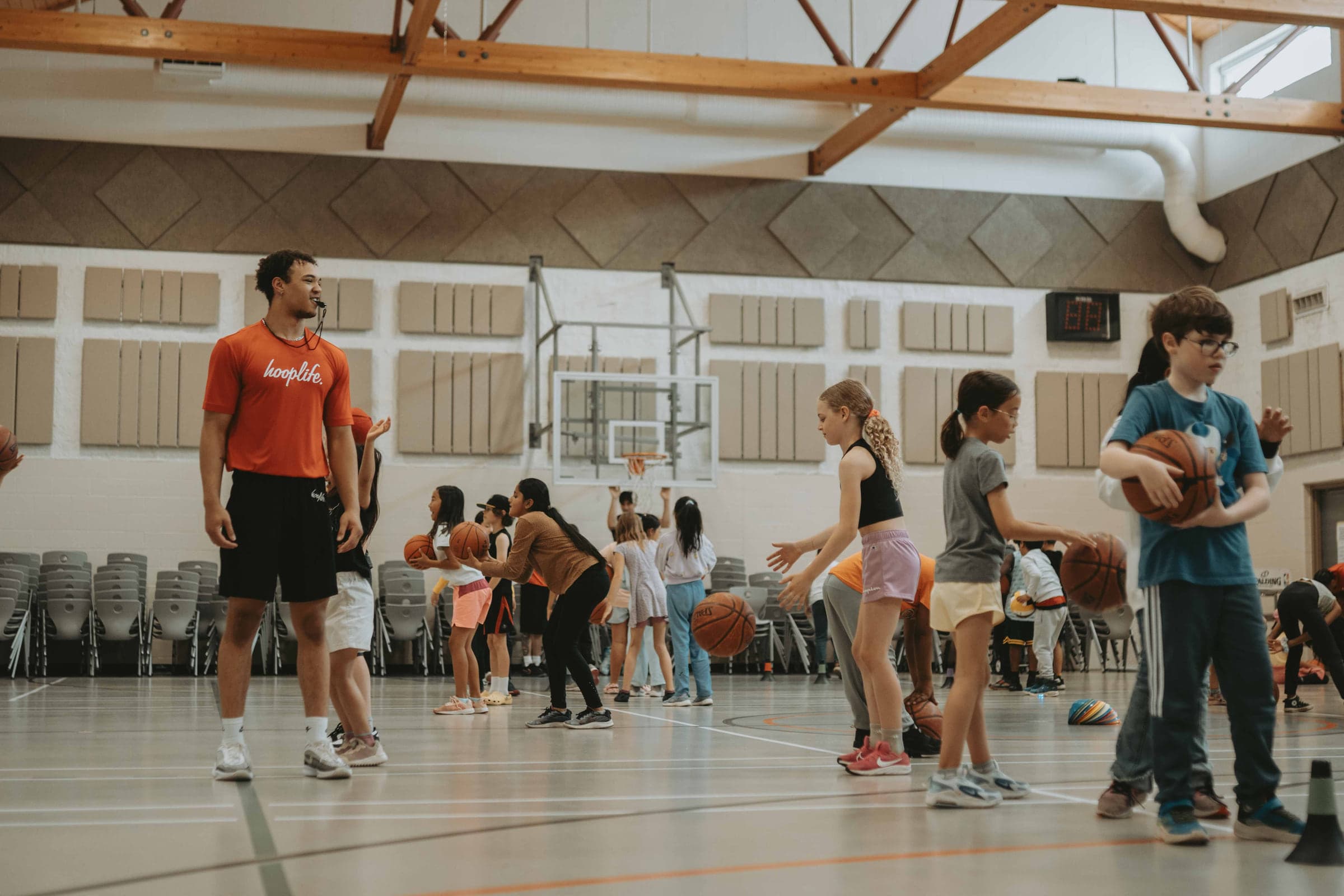
Each day mixes real skill work, shooting, ball handling, finishing, defending, with games and scrimmages so players use what they just learned immediately. Fitness circuits and HoopLife's Confidence, Leadership and Basketball IQ sessions run through both days rather than getting bolted on at the end. For a high school group, that leadership and character piece is not an afterthought. Teenagers are old enough to actually engage with talking about pressure, feedback and self-worth in a way that sticks, and the coaches run those sessions with that age group specifically in mind.
The content itself comes from HoopLife's written coaching library, the same system used at the Regina facility where the club coaches hundreds of players a week. Practice plans are organized around four training themes: off-ball movement, defence and communication, creating advantages, and shooting. Every drill is diagrammed, every coach trained on the same playbook, and every player leaves with a printed booklet built from that same material. A related read on how that curriculum breaks down by development stage is in what kids learn at each age at HoopLife, which explains why the order players learn things in actually matters, whether they are seven or seventeen.
What does a school or town need to provide, and what does it cost?
Genuinely just a gym with working hoops and one local point of contact for the two days. HoopLife brings the coaching team, sized to the group, led by a senior coach who runs the clinic and deals directly with the coordinator on the ground. If the gym is short, the hoops do not lower, or the space is a community hall rather than a full gym, that gets built around too. Cost is never a flat number on the website, because driving distance, whether the coaches stay overnight, whether they fly in, and how many days a town wants all move the quote. A same-day drive from Regina and a fly-in clinic are not the same trip, so every community gets a written estimate with the line items shown, rather than a number that would be wrong for most people reading it.
For a high school specifically, the standard is still two full days, which is long enough for players to actually improve at something and for coaches to build a relationship with them rather than showing up as strangers for an afternoon. A longer visit can be priced too, a coordinator just needs to say what they have in mind when requesting the estimate.
Why does a high school benefit from this over a local pickup camp?
Because the structure does not disappear once players are past middle school age. A lot of what exists for teenagers locally is unstructured gym time or a short tournament weekend. HoopLife's clinic keeps the same bones for a high school group as it does everywhere else: skill work that is coached, not just supervised, scrimmages that let players use it right away, and the leadership sessions running the whole time rather than tacked on. Communities that have hosted before describe kids asking when the next one is coming, which is the outcome a school or town is actually looking for from a camp: not just two good days, but a reason for players to want more of this.
A coordinator ready to look at dates for a high school group, a middle school, or a mixed-age town camp can start with HoopLife's Bring HoopLife To You enquiry form, which is where every estimate begins.
Frequently asked questions
Does HoopLife run a basketball camp specifically for high school students?
HoopLife does not run a separate program by age; the same two-day travel clinic that goes into First Nations communities and small towns scales to a high school group by grouping players by age and ability on the day, so a school can book the same clinic format for teenagers.
Is there a minimum or maximum age for a HoopLife travel clinic?
No hard cap exists on either end. HoopLife says plainly it takes who comes, and in many communities that means most of the school attends across a range of ages, with coaches grouping everyone by ability once they see the group play.
What does a high school need to have ready before booking a clinic?
Just a gym with working hoops and a local point of contact for the two days. Rough numbers on how many students to expect and their experience level help HoopLife bring the right number of coaches and print the right number of booklets.
How much does a HoopLife clinic cost for a high school or town?
There is no flat published price because distance, overnight stays, flights and the number of days requested all change the number. Every community gets an individual written quote after requesting an estimate through the Bring HoopLife To You form.
Thinking about your community?
Tell us who to reach out to and a real person from HoopLife will be in touch about bringing basketball to your young people.