A Week in the Life of a HoopLife Coach This Fall
What the calendar actually looks like for the coaches running sessions, league teams and camps at the HoopLife Centre right now.

- Coaches lead weekly skills sessions for ages 7-17, split by beginner and advanced levels.
- League team coaches run game nights with three games, a 30-minute training block and a workshop.
- Young Stars sessions for ages 3-6 run multiple times a week across different age groups.
- Coaches work 15-40 hours a week, mostly evenings and weekends when kids are out of school.
- Summer camps run five full days, while school-break camps are three days.
The Regina coaching role is not a single job. It is a mix of sessions, league teams, camps and Young Stars classes, all running at different times across the week. What fills your calendar depends on whether you are full-time or part-time, and which programs need a coach when you start.
Here is what the fall season looks like right now, and what a coach at the HoopLife Centre is actually doing.
Weekly Skills Sessions
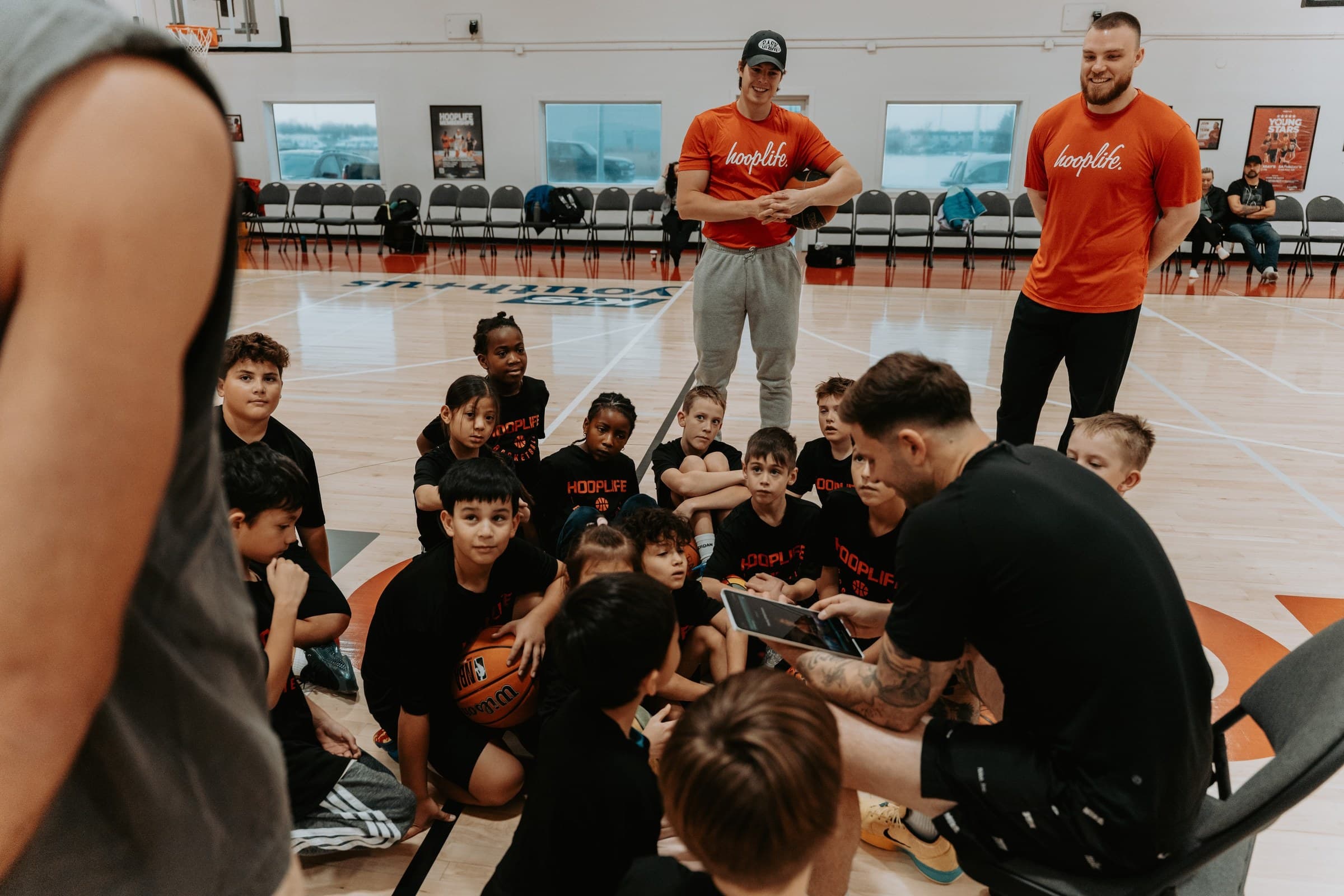
These are the backbone of the schedule. One-hour sessions for kids ages 7-17, capped at eight players per level. Coaches lead beginner groups and advanced groups, and athletes are grouped by age and ability so the work matches where they are. These sessions are popular with families, and spots at each level tend to go fast.
Sessions run year-round, not just during school basketball season. A coach might lead one session a week or several, depending on how many hours they are working. The drill plans are dynamic and team-focused, built to keep players moving rather than standing in lines.
Coaches also run the Essential Skills Training Sessions, which are structured the same way but targeted at younger or newer players who need the fundamentals before they move into advanced work.
League Team Nights
The HoopLife League runs three seasons a year: fall, winter and spring. Each season is 10 weeks long. This fall, there are teams across boys grades 1-12 and girls grades 1-8.
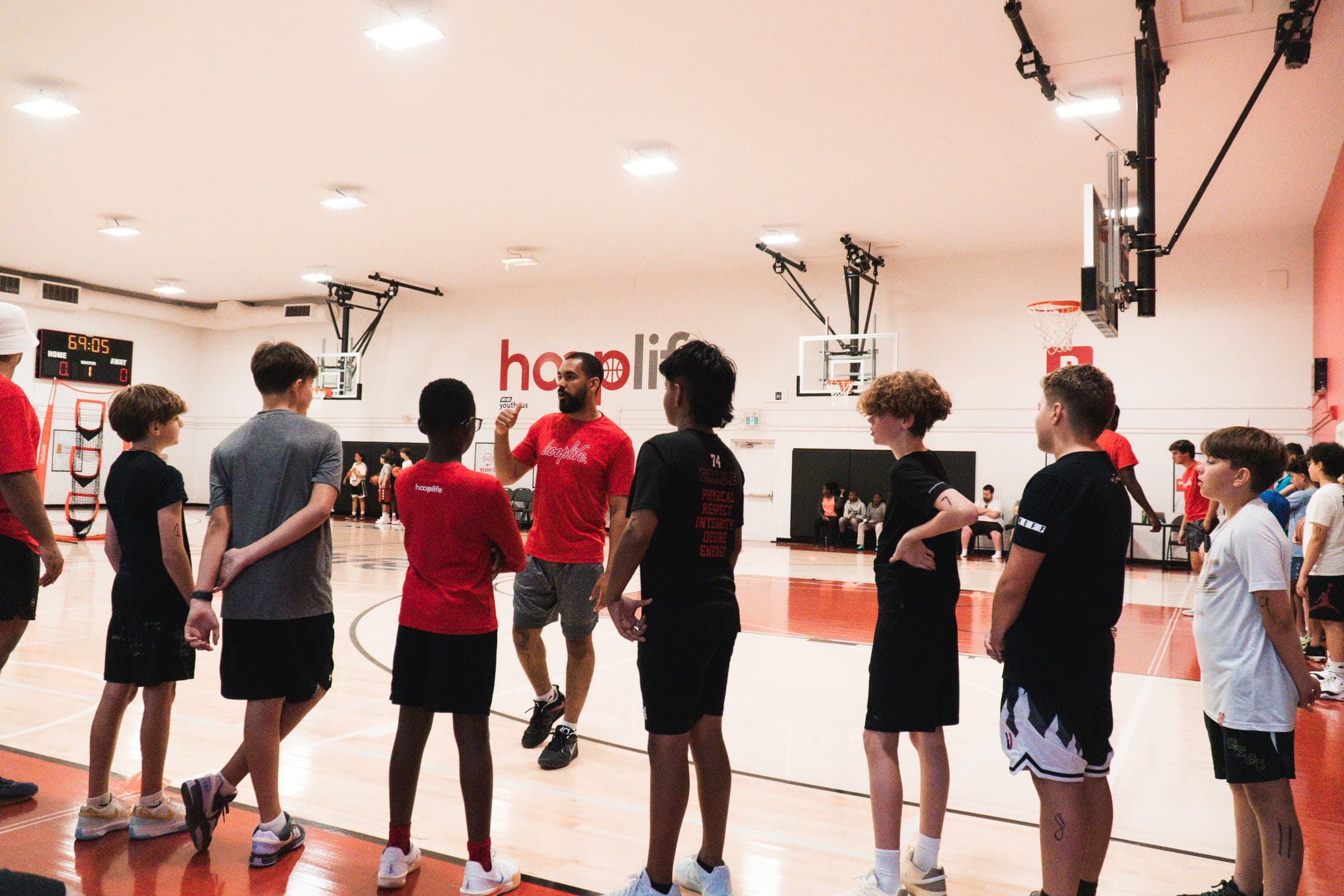
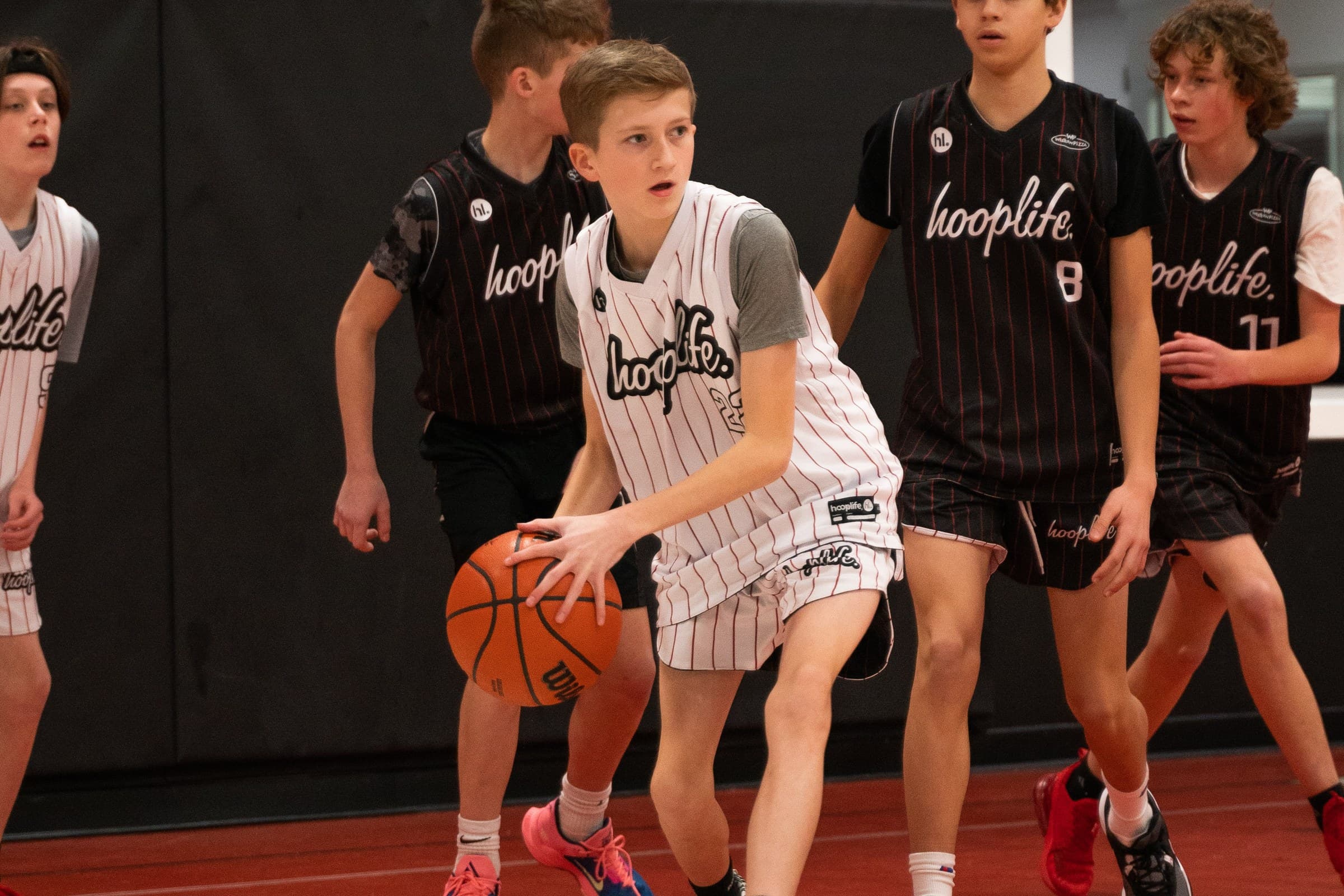
Grades 1-4 play 3x3. Grade 5 and up play officiated 5v5. Every team gets three games in a single night, plus a 30-minute training block and a confidence and leadership workshop. A league night is not just refereeing games. It is coaching through the training block, managing the roster during games, and helping kids stay engaged through a busy evening.
Some coaches head-coach a team. Others assist. Either way, you are with that team for the full 10-week season, and if the team makes playoffs or all-star events, you are there too.
League nights happen during the week, mostly evenings. A coach working full-time might lead multiple teams across different age groups. A part-time coach might lead one.
Young Stars Classes
These are weekly classes for kids ages 3-6. The 3-4 age group runs on Mondays, Thursdays and Saturdays this fall. The 5-6 age group runs on Wednesdays, Thursdays, Saturdays and Sundays.
Young Stars is not scaled-down basketball. It is built for kids who are still learning how to follow instructions in a group, how to take turns, and how to move their body with a ball. Coaches adapt drills to where each kid is, keep the energy high, and make it fun enough that a three-year-old wants to come back.
Sessions are shorter than the older age groups, but they require the same level of focus. Parents are watching, kids are unpredictable, and the coach has to hold the room.
What Young Stars Actually Requires
Patience, clarity and the ability to demonstrate a skill in a way a preschooler can copy. A coach in this program is not running plays. They are teaching a kid how to dribble without looking at the ball, or how to shoot toward a hoop that is still taller than they are.
Young Stars coaches also greet parents, answer questions about what their child is working on, and help families figure out if their kid is ready to move up to the next age group.
Camps
Summer camps run five days, 9:00 to 3:00. School-break camps run three days, same hours. Both are capped at 32 players and grouped by age.
This August, HoopLife ran a boys camp for ages 7-12. Camps are usually split by gender in the summer, and usually co-ed during school breaks. A coach working a camp is there for the full day, leading drills, managing groups, keeping the gym organized, and making sure 32 kids stay engaged for six hours.
Camps are high-intensity weeks. The pay reflects that. But they are also where coaches get to work with players for more than an hour at a time, and where skill development can actually move faster because of the volume of reps.
Open Gym
Open gym runs regularly, capped at 20 players. It is drop-in, which means the group changes every time. Coaches supervise, set up games, and make sure the space stays safe and organized.
Open gym is less structured than a session or a camp, but it still requires a coach who can read the room, adapt on the fly, and keep a mix of skill levels playing together without anyone sitting out.
The Rest of the Week
Coaches also set up and tear down equipment daily. They keep the gym tidy. They greet athletes and parents when they walk in, and they build the kind of relationships that make a kid want to show up next week.
The work is mostly evenings and weekends, because that is when kids are available. A full-time coach might work up to 40 hours a week. A part-time coach works 15 to 25 hours, depending on the season and what programs need coverage.
There is room to grow. Coaches who want more responsibility can take on additional teams, lead more sessions, or step into camps. Full-time roles offer more leadership opportunities than part-time ones, but both start with the same work: showing up, coaching well, and owning the outcome.
What the Role Actually Requires
You need to be a skilled player with significant basketball experience. You need to be in active athlete shape, because you are demonstrating drills and moving with the group. You need to know the game well enough to adapt a drill for a beginner and challenge an advanced player in the same session.
You also need to be the kind of person who can admit a mistake, bring a solution instead of a problem, and work with zero ego. The role is part coaching, part facility management, part relationship-building. If you are looking for a job where you only run drills, this is not it.
Compensation is $15 to $25 per hour, based on experience. Full-time staff get three weeks of vacation. Every coach gets 24/7 gym access, which means you can train whenever the building is open.
NCCP certification is a bonus, but not required. What matters more is that you have coached or played at a high level, that you care about the kids in front of you, and that you see this work as more than a job.
If you want to know what the role actually is, look at the fall calendar. Sessions on weeknights. League teams running three games and a workshop. Young Stars classes scattered across the weekend. Camps during school breaks. That is the week. Roles like this are popular and they do go, so if it fits, grab your spot while it is open — the application is here.
Frequently asked questions
How many hours a week does a HoopLife coach in Regina actually work?
It depends on whether the role is full-time or part-time. Full-time coaches can work up to 40 hours a week, while part-time coaches typically work 15 to 25 hours. Most of the work happens evenings and weekends, because that is when kids are available for sessions, league games and camps. The exact schedule depends on which programs need coverage and what season is running.
What is the difference between coaching a weekly session and coaching a league team?
A weekly session is a one-hour skills-focused training block, capped at eight players and split by beginner or advanced level. A league team is a 10-week commitment where you coach the same group through game nights, training blocks, workshops, and potentially playoffs and all-star events. League nights include three games, a 30-minute training session and a confidence and leadership workshop, all in one evening. Sessions are about skill development. League teams are about applying those skills in games and growing as a team over a full season.
Do HoopLife coaches only work during basketball season?
No. HoopLife runs year-round programming, so coaches work across all four seasons. The HoopLife League runs three 10-week seasons: fall, winter and spring. Weekly skills sessions run continuously throughout the year. Camps happen during summer and school breaks. Young Stars classes for ages 3-6 run in multiple terms. The calendar shifts depending on the season, but there is always programming running and always coaching work available.
What does a HoopLife coach actually do during a camp week?
Coaches lead drills, manage groups and keep up to 32 players engaged for six hours a day. Summer camps run five days from 9:00 to 3:00, and school-break camps run three days at the same hours. Camps are grouped by age, and usually split by gender in the summer. Coaches are responsible for the full day, which includes setting up the gym, running high-energy sessions, adapting drills for different skill levels, keeping the space organized, and making sure every player gets meaningful reps and stays involved.