How to Teach a Kid to Play Defence
Defence is the fastest way for a young player to become useful, and it is the thing almost nobody practises.

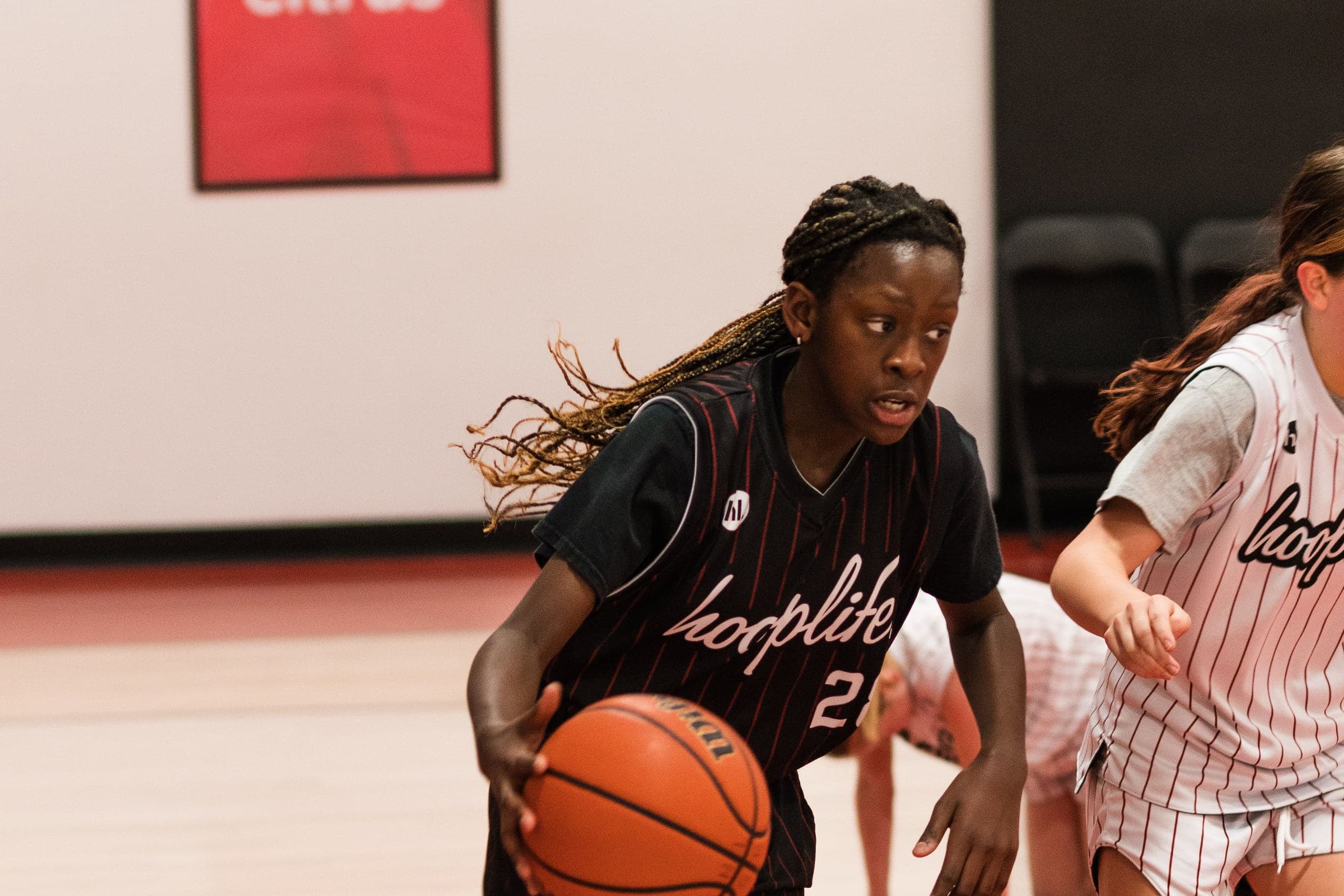
- A kid can be genuinely valuable on defence long before they can score.
- Teach the stance and the slide before anything about stealing the ball.
- Reaching for steals is the single most common thing to coach out of a beginner.
- Defence is mostly effort, which means it is available to every player immediately.
Ask a group of ten-year-olds what they want to work on and none of them will say defence. Which is a shame, because it is the fastest route from "not much use out there" to "coach wants them on the floor".
Scoring takes years. Defence takes effort and about three weeks of teaching.
Start with the stance, and be fussy about it
Feet wider than the shoulders. Knees bent, not the waist. Chest up, back flat. Hands out and active, roughly at hip height. Weight on the balls of the feet.
Nearly every young player bends at the waist and stands too narrow, which means the first hard step past them ends the play. Fix the stance and half the problems disappear without ever being mentioned.
Four drills that actually work
1. Slides, no crossing
Low stance, slide five steps right, five left, without the feet ever touching or crossing. 30 seconds, three rounds.
Watch for: standing up as they tire. The moment they rise, stop and reset. A tired stance practised is a bad stance learned.
2. Mirror
Two players face each other a metre apart, one leads and moves side to side, the other mirrors without touching. 30 seconds each way.
This is the one kids actually enjoy, and it teaches reacting to the body rather than to the ball.
3. Close-out
Start under the hoop, sprint at a player standing on the wing, and in the last two steps chop the feet short and get the hands up.
Watch for: running straight at them at full speed. A defender who cannot stop is worse than no defender, because now the attacker just goes around them.
4. One-on-one from a pass
Pass to an attacker, close out, and play live to two dribbles. Short and competitive.
Everything above is theory until they have to do it against somebody genuinely trying to beat them.
The habit to coach out immediately
Reaching. Young players lunge for the steal constantly, because a steal is exciting and staying in front of somebody is not.
Every reach that fails puts them out of position and often gives away a foul. The rule worth repeating until it is boring: move your feet, not your hands. Hands active, never lunging.
Why this matters more than it sounds
Defence is almost entirely effort and position, which means it is available to a child on day one regardless of talent. For a kid who is not yet a scorer, it is the thing that gets them minutes, gets them praised and keeps them in the sport long enough to develop the rest.
We build a defensive block into weekly sessions for exactly that reason, and 3x3 is where it gets tested, because in a half-court game with three players there is nowhere to hide.
For coaches
If you coach youth basketball, the four drills above will fill fifteen minutes of a practice and can run every week without getting stale. This is how we structure a full practice plan, and the HoopLife app has video on every drill if you want players doing them at home.
Frequently asked questions
How do you teach basketball defence to beginners?
Stance first, then sliding without crossing the feet, then reacting to another player's body, then closing out under control, and only then live one-on-one.
Why do young players reach for steals?
Because steals are exciting and staying in front of someone is not. It is the main habit to coach out, since a failed reach puts them out of position and often gives away a foul.
What age can kids start learning defence?
Around seven or eight for the stance and slides. Live one-on-one work makes sense a little later, once they can hold the stance while tired.
Want the details for your kid?
Leave your info and a real person from HoopLife will send the details and answer your questions. Spots are limited and they do go.