Indigenous Youth Sports Programs: How a HoopLife Clinic Works
A look at how HoopLife's First Nations basketball clinics run, what a two-day visit includes, and how a community actually books one.

- A HoopLife clinic is two full days combining skill work, scrimmages, fitness circuits and the Confidence, Leadership and Basketball IQ program.
- There is no hard cap on how many kids can take part; HoopLife groups by age and ability on the day and scales its coaching team to the group.
- A community only needs to provide a gym with working hoops and one local point of contact; HoopLife brings the coaches, curriculum and printed booklets.
- Pricing is quoted individually per community based on distance, travel, days requested and coaches needed, with a written itemised estimate.
- Requests go through the First Nations basketball clinics page, where a rough headcount and age spread help HoopLife plan the visit.
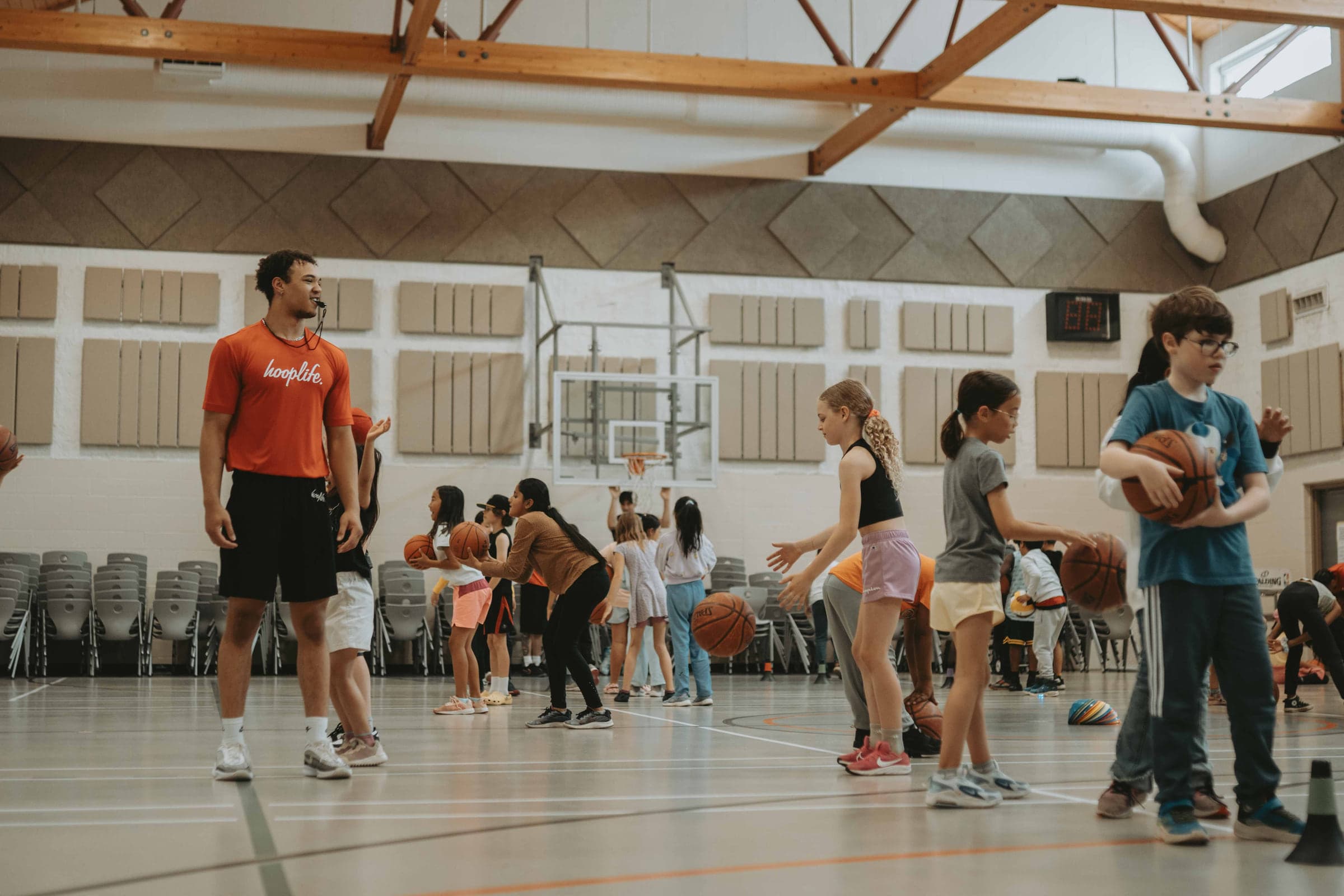
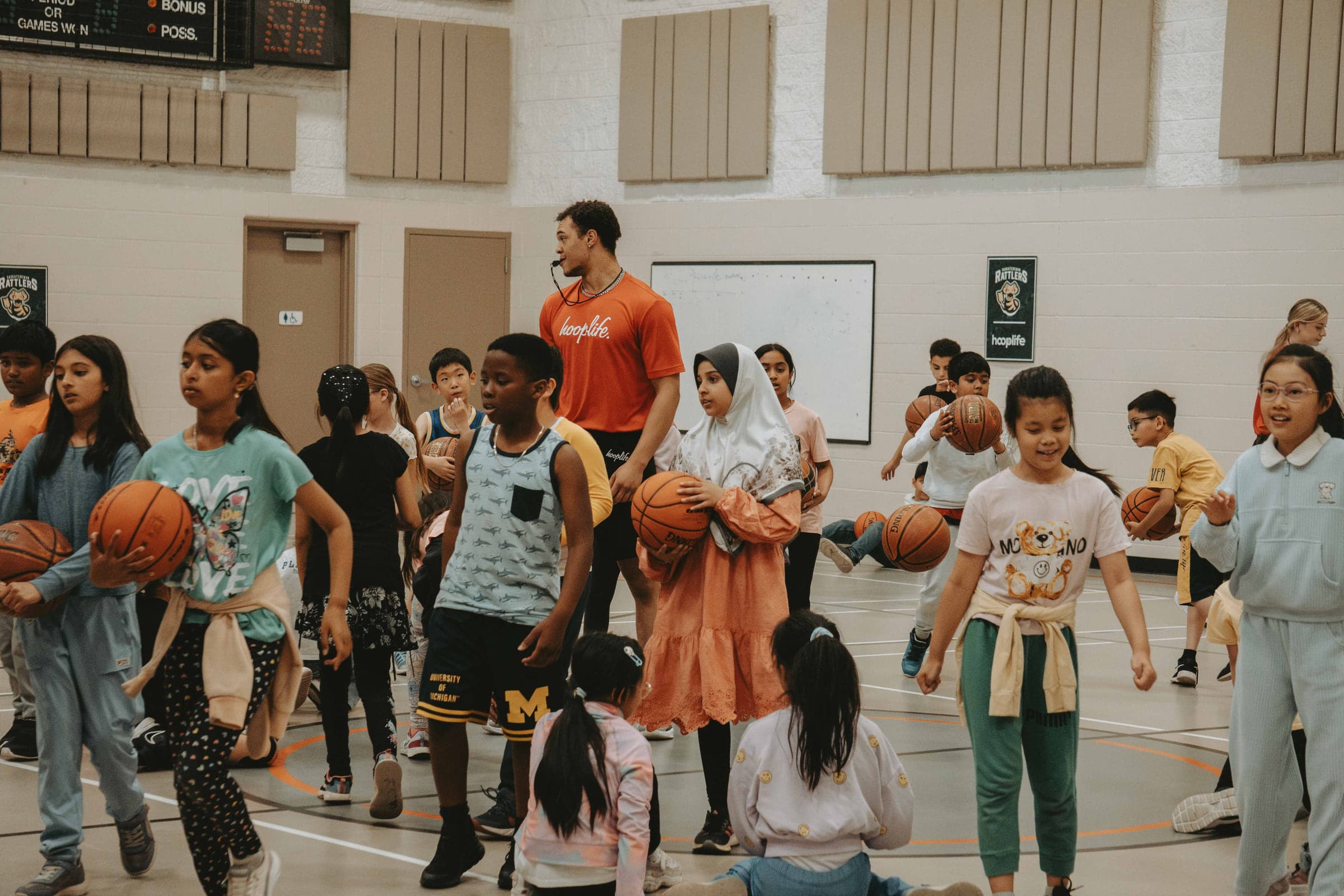
An Indigenous youth sports program built around a HoopLife clinic is two full days of basketball and character development, run in a community's own gym by a travelling team of HoopLife coaches. It mixes skill work, scrimmaging, fitness circuits and HoopLife's Confidence, Leadership and Basketball IQ sessions, and every child keeps a printed training booklet when the coaches leave.
Band offices, school principals and youth leaders searching for a real program for their kids are usually looking for something specific: not a one-off assembly, not a generic "sports day," but two days that actually teach something and leave a mark after the coaches drive or fly out. That is the model HoopLife built its First Nations basketball clinics around, and it is worth laying out plainly what that looks like on the ground.
What actually happens over the two days
Each day blends real skill work, shooting, ball handling, finishing, defending, with games and scrimmages so kids use what they just learned right away. Fitness circuits and the Confidence, Leadership and Basketball IQ sessions are built into the schedule, not tacked on at the end. Kids are moving, playing and coached by name for both days, and the leadership work sits inside the basketball, not off to the side as a separate talk.
HoopLife runs every clinic off its own written coaching library, the same system used at its home facility in Regina, organized around four training themes: off-ball movement, defence and communication, creating advantages, and shooting. Every drill is diagrammed, every coach trained on the same playbook, and the printed booklet every child keeps comes from that same material. It is a real curriculum, not an improvised visit.
Who it is for, and what a community needs to provide
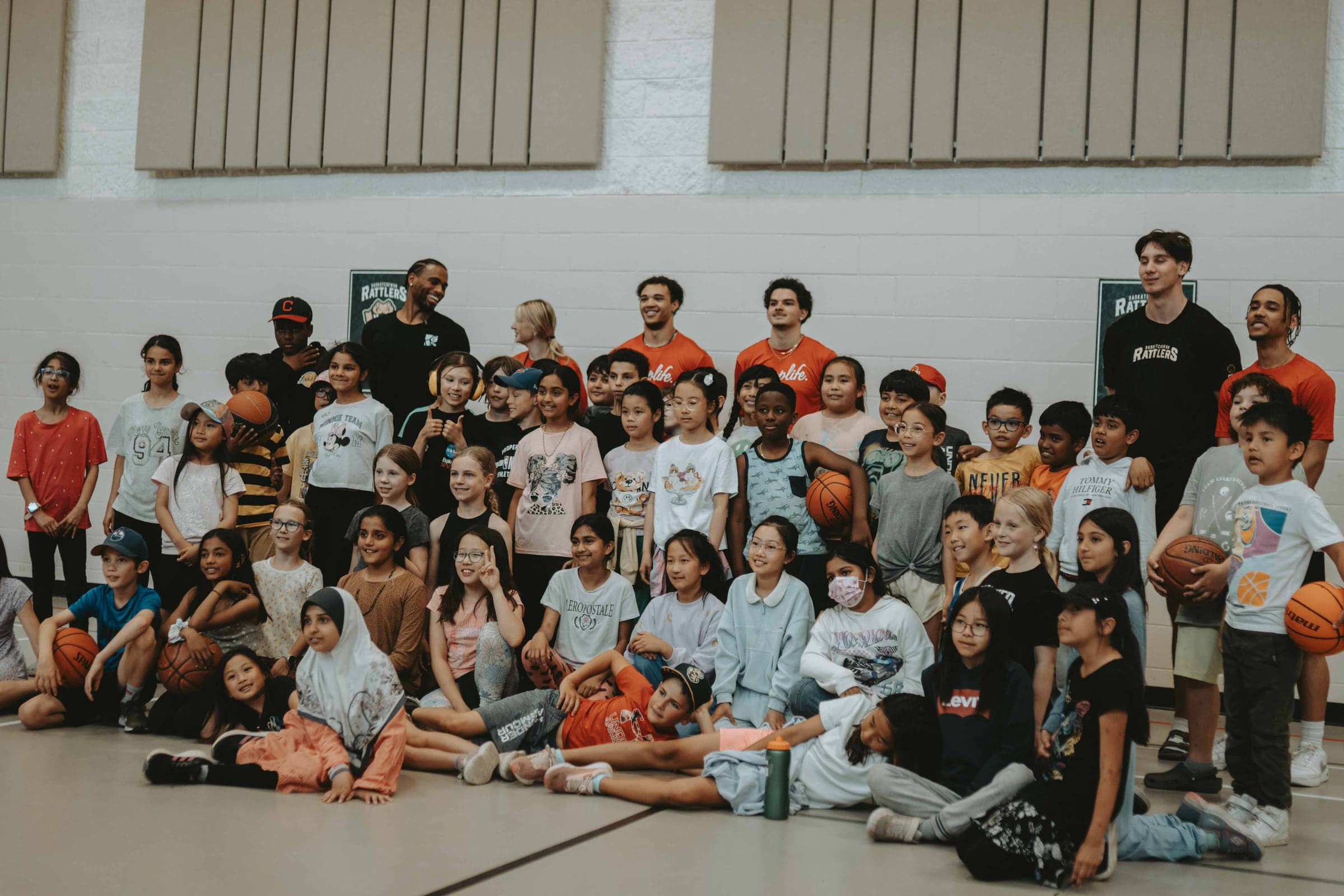
HoopLife takes who comes. In a lot of communities that means most of the school shows up, so the coaches group by age and ability on the day and build the sessions around whoever is actually in the gym. A rough headcount ahead of time helps HoopLife decide how many coaches to bring and how many booklets to print, but there is no hard cap on numbers and no requirement that kids already play.
Most kids at a given clinic have never had real coaching before, and those are often the ones the two days change the most. Beginners are grouped so they are never stuck behind a kid who has played for years, and nobody sits out. What a community needs to provide is short: a gym with working hoops, and one local point of contact for the two days. HoopLife brings the coaching team, the curriculum and the printed booklets. If the floor is short, the hoops do not lower, or the space is a community hall rather than a full gym, that is worth mentioning ahead of time, HoopLife has run clinics in every kind of space and builds around what a community actually has.
HoopLife sends a team led by a senior coach who runs the clinic and is the person the local coordinator deals with on the ground for those two days. Team size is matched to the group, which is another reason a rough headcount in advance is worth sending along with a request.
What it is meant to change, beyond the scoreboard
The stated goal behind the Confidence, Leadership and Basketball IQ program is straightforward: give young athletes the knowledge and confidence to become leaders in their own community and schools. Communities that have hosted a clinic report kids feeling more connected and supported. The basketball is real, the standings and the skill work matter, but the two days are built to leave something behind that outlasts the visit, in how a kid carries themselves off the court as much as on it.
This is also why the format stays at two full days as the standard rather than a shorter visit. It is long enough for kids to actually improve at something specific and for HoopLife's coaches to build a real relationship with them over the two days, instead of showing up as strangers for an afternoon and leaving before anyone learns a name. Communities that want a longer visit can ask for one when they request an estimate, and HoopLife will price it out.
How a community actually books one
There is no published price list, because the honest cost of a clinic depends on where a community is. Driving distance, whether the coaching team stays overnight, whether they fly in, how many days are wanted and how many coaches are needed all move the number. A same-day drive from Regina and a fly-in to a fly-in community are not the same trip, so HoopLife quotes every community individually with a written, itemised estimate rather than publishing a number that would be wrong for most people reading it.
The path in starts with a request through the First Nations basketball clinics page, where a coordinator lays out roughly how many kids to expect, the age spread, and what the gym looks like. From there HoopLife builds the trip around the numbers a community actually has. For a fuller walk-through of what those two days include hour by hour, the HoopLife clinic breakdown covers the schedule in more detail, and the guide on how coordinators book a clinic lays out what to arrange on the local side before the coaches arrive.
Get the conversation started
The best next step for a coordinator, principal or youth leader is a direct request through the clinic enquiry form: send a rough headcount, the age range, and what the gym has to work with, and HoopLife will come back with a real, itemised quote built around that community specifically.
Frequently asked questions
Do the kids need to already play basketball to take part in a HoopLife clinic?
No. Most kids at a given HoopLife clinic have never had real coaching before, and those are often the ones the two days change the most. Coaches group participants by ability so beginners are never stuck behind more experienced players, and nobody sits out.
How many kids can a HoopLife clinic actually handle?
There is no hard cap. HoopLife scales the clinic to the community rather than asking the community to fit a fixed clinic size, though a rough headcount in advance helps HoopLife decide how many coaches to bring and how many training booklets to print.
What does a community need to provide to host a HoopLife clinic?
Just a gym with working hoops and one local point of contact for the two days. HoopLife brings the full coaching team, the written curriculum and printed character development booklets for every child.
How much does a HoopLife clinic cost, and how do we get a price?
HoopLife quotes every community individually because distance, overnight stays, flights, number of days and number of coaches all change the number. Request an estimate through the clinic enquiry form and HoopLife will send a written, itemised quote.
Thinking about your community?
Tell us who to reach out to and a real person from HoopLife will be in touch about bringing basketball to your young people.