Can Local Adults Keep Coaching After a HoopLife Clinic Leaves?
How a HoopLife basketball clinic trains local coaches alongside kids, so a community's youth program keeps running after the team drives home.

- HoopLife clinics run on the same written coaching library used at the Regina facility, with drills built around four themes: off-ball movement, defence and communication, creating advantages, and shooting.
- A local adult can be trained as a co-coach during the standard two-day clinic; this must be requested in advance so the visiting senior coach can plan for it.
- The only things a community provides are a gym with working hoops and one local point of contact for the two days.
- Every child keeps a printed training booklet built from the same material a local co-coach is trained on.
- Pricing is quoted individually per community through a written, itemised estimate; there is no published flat rate.
Yes. A HoopLife clinic can include training local adults alongside the kids, so a coordinator, a teacher, a parent or a youth worker leaves the two days able to keep running sessions after the HoopLife team has gone home. This is not a separate program. It happens inside the same two days of basketball, built around the coaches your community already has.
Why a coordinator would ask for this
A two-day visit is real and it changes something for the kids who are there. But a gym that only comes alive when a van from Regina pulls up is not what most coordinators are actually trying to build. Band offices, schools and rec boards booking a HoopLife clinic are usually thinking past the weekend: who keeps the kids moving in February, who runs a Tuesday night open gym, who the kids go to when they want to get better. If your community already has someone willing to coach, a HoopLife clinic is a chance to put real structure under that person, not just entertain the kids for two days and leave.
What that actually looks like inside the two days
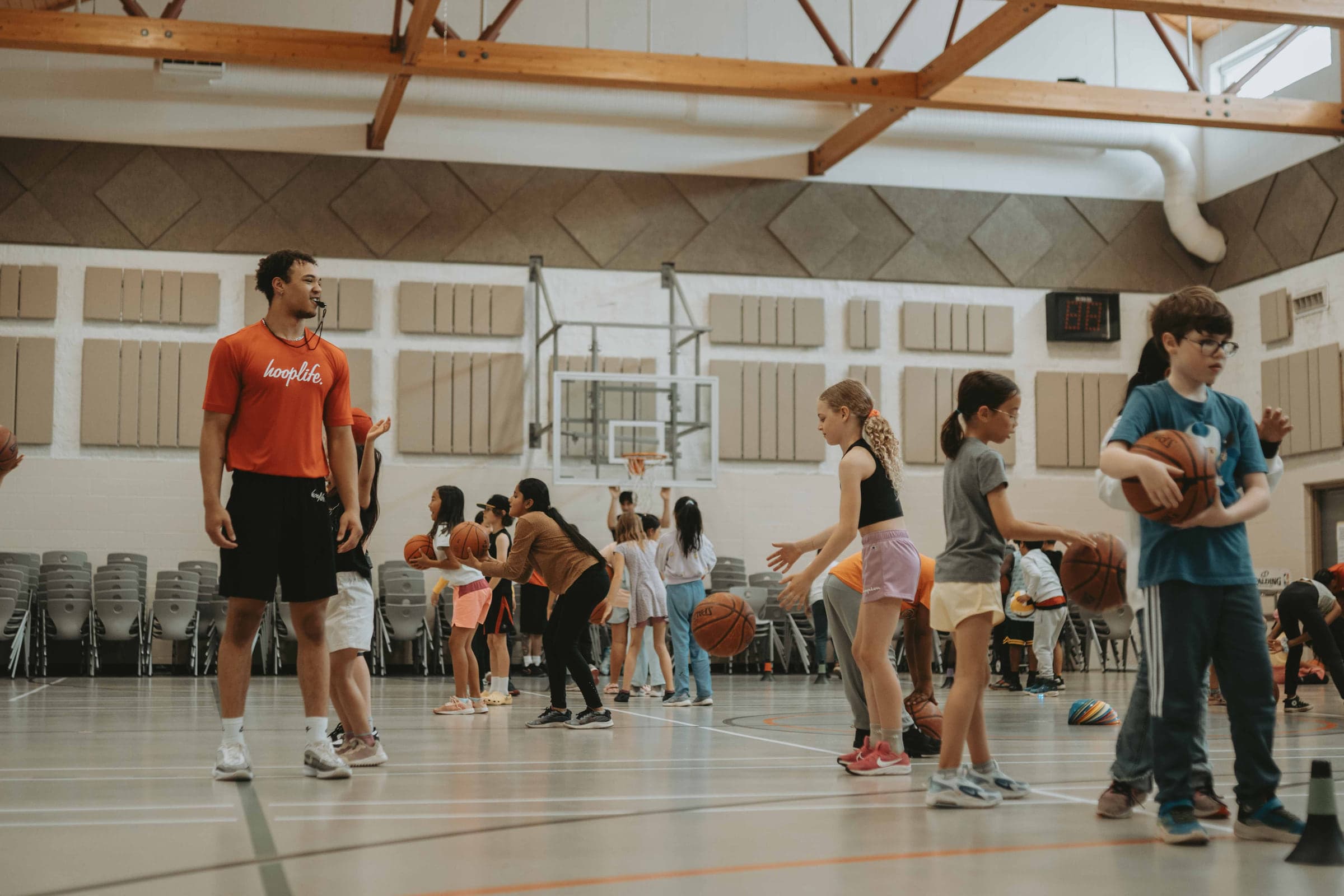
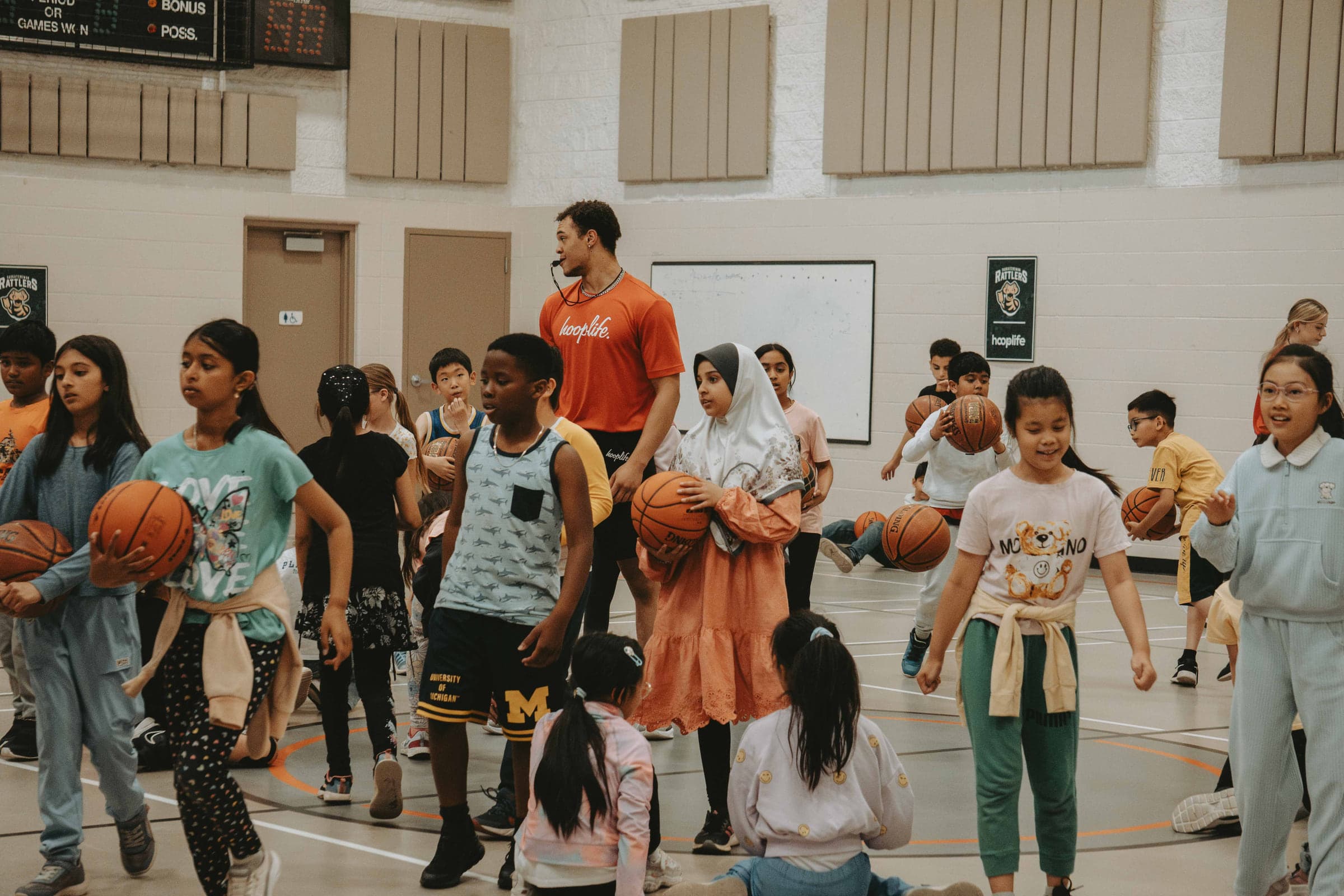
Every HoopLife clinic runs on the same written coaching library used at the HoopLife Centre in Regina, where HoopLife coaches hundreds of players a week. Practice plans are organized around four training themes: off-ball movement, defence and communication, creating advantages, and shooting. Every drill is diagrammed, and every HoopLife coach is trained on the same playbook and the same basketball vocabulary. A local adult who wants to keep coaching gets shoulder-to-shoulder time with that system for both days: watching the senior coach run the floor, taking a group through drills alongside a HoopLife coach, and seeing exactly how the Confidence, Leadership and Basketball IQ sessions get delivered. The printed training booklet every child keeps at the end comes from that same material, which means the local coach is handed the same playbook the kids are, not a separate summary.
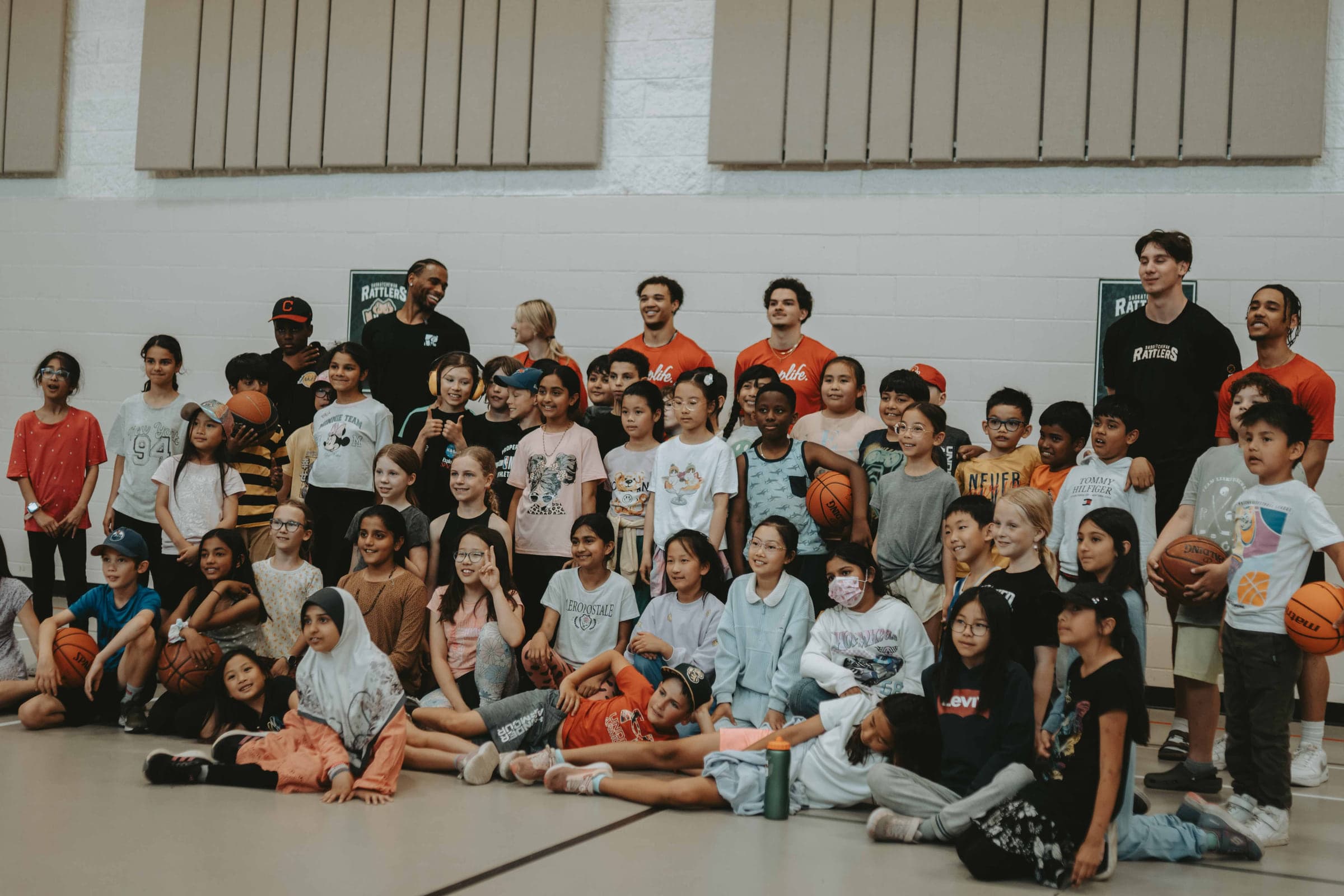
This works because HoopLife already scales a clinic to whoever shows up. There is no hard cap on how many kids take part, and coaches are grouped by age and ability on the day rather than forced into one script. Folding a local adult into that structure as a co-coach is the same kind of flexibility, just applied to the adults in the room instead of the kids.
What a coordinator needs to arrange for this to happen
The baseline is still simple: a gym with working hoops, and one local contact person for the two days. If you want local coaches trained up as part of the visit, the only extra step is telling HoopLife in advance, when you request an estimate, so the senior coach running your clinic plans for it. Say how many adults want hands-on time and what their experience level is. A parent who has never coached and a gym teacher who already runs intramurals need different amounts of attention from the HoopLife lead coach, and that is easy to plan for if it is known ahead of time. It is much harder to improvise on the first morning.
This same conversation is worth having if your community has specifically asked for Indigenous coaches on the floor, or if bullying and vaping are concerns your school or health and wellness team wants addressed directly. Both land better when they are raised at the estimate stage rather than discovered on day one, because they shape who HoopLife sends and how the Confidence, Leadership and Basketball IQ sessions are framed for your kids.
What it changes after HoopLife leaves
A single clinic is a good two days on its own. A local adult who came away actually knowing the drills, the themes and how the leadership sessions run is what lets a town or a Nation keep that energy going on a Tuesday night in March. It also makes a second visit more useful instead of starting over: a returning HoopLife team can build on what a local coach has kept running rather than reteaching the basics every time. For more on how the two days are structured day to day, this breakdown of what actually happens at a HoopLife clinic walks through the skill work, the games and the workshops in order.
If this is the piece missing from your community's youth sport plan, the place to start is the same estimate request every clinic begins with. Tell HoopLife how many kids you expect, what ages, and that you want local adults trained alongside the kids, and the written, itemised estimate that comes back will reflect it.
Frequently asked questions
Can HoopLife train a local coach instead of just running the clinic for us?
Yes. HoopLife can fold a local adult into the two-day clinic as a co-coach, working alongside the HoopLife coaching team on the same drills and the same Confidence, Leadership and Basketball IQ sessions. Tell HoopLife this is what you want when you request an estimate so the senior coach running your clinic can plan for it.
Does training local coaches cost extra?
HoopLife quotes every community individually based on travel distance, number of days and number of coaches, so there is no single published number. Request an estimate and say you want local coaches trained alongside your kids, and that gets priced into the same itemised quote.
Do the local coaches need basketball experience first?
No. HoopLife groups by ability on the day for kids and can do the same for adults who want to coach, so a parent with no coaching background and a teacher who already runs intramurals can both get useful time with the HoopLife coaching team during the same clinic.
What is actually included if we book a clinic with this in mind?
The standard two full days of skill work, games, fitness circuits and the Confidence, Leadership and Basketball IQ sessions, run from HoopLife's written coaching library, plus a printed training booklet for every child. Local coaching time is added into that same structure, not run as a separate program.
Thinking about your community?
Tell us who to reach out to and a real person from HoopLife will be in touch about bringing basketball to your young people.