Small Gym, Mixed Ages? What a HoopLife Clinic Needs From You
What a coordinator actually needs to arrange before a HoopLife basketball clinic, from gym size to age spread to who never played before.

- HoopLife clinics need only a gym with working hoops and one local point of contact; no minimum gym size or hoop height is required.
- There is no pre-clinic tryout: coaches group kids by age and ability on the day itself, and there is no hard cap on how many can take part.
- The standard visit is two full days combining skill work, scrimmages, fitness circuits and the Confidence, Leadership and Basketball IQ sessions.
- Pricing is always a written, itemized quote based on distance, days and coaches needed, never a published flat rate.
- For town and city bookings, registration revenue goes directly to the local host, with HoopLife delivering the coaching separately.
A HoopLife clinic does not need a full-size gym, a set number of kids, or a group that already plays basketball. It needs a gym with working hoops and one local point of contact for two days. Everything else, HoopLife brings and builds around whatever is actually in front of it.
That last part is the thing coordinators usually want spelled out before they commit their gym, their staff time and their community's trust to a weekend. Here is what that actually means in practice.
What if our gym is small or the hoops don't lower?
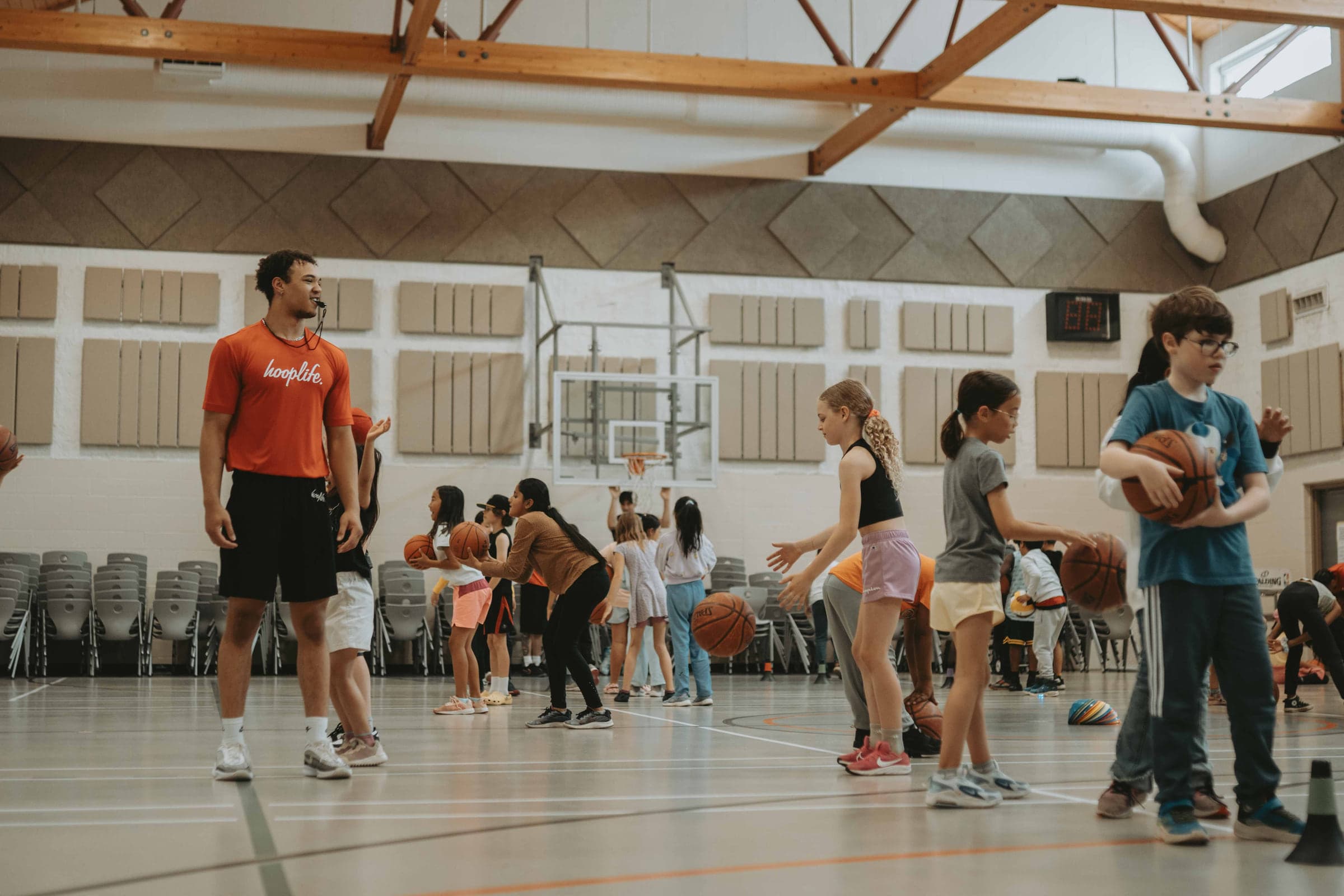
Tell HoopLife before the visit, and the clinic gets built around the space, not the other way around. HoopLife has run clinics in every kind of space, from a community hall to a school gym with a short floor to a court where the hoops do not adjust. A coordinator working with less than a regulation gym is not a problem to solve, it is a detail to mention on the estimate request.
What if the kids are all different ages and skill levels?
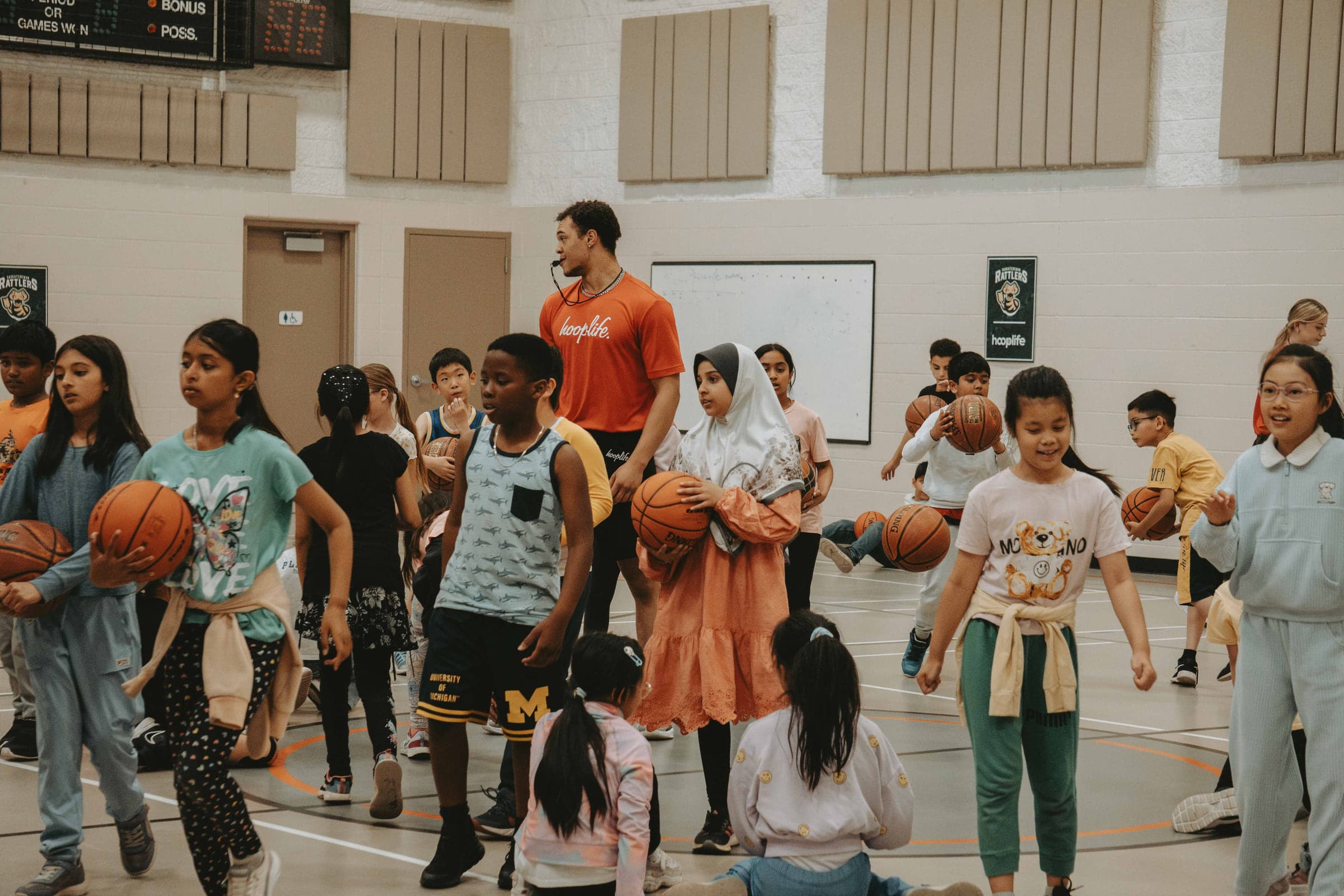
This is the normal case, not the exception. HoopLife takes who comes, and in a lot of communities that means most of the school shows up across a wide age range. There is no pre-clinic tryout and no hard cap on numbers. Coaches group players by age and ability on the day itself, so a six-year-old is not standing next to a fifteen-year-old drill for drill, and a beginner is not stuck behind a kid who has played for years. A rough headcount and the age spread ahead of time is what HoopLife uses to decide how many coaches to bring and how many training booklets to print, but the exact number does not need to be locked down early.
Most kids at a given clinic have never had real coaching before, and coordinators consistently hear that those are the kids the two days change the most. Nobody sits out for not having played, and nobody is turned away for having played a lot.
What actually happens across the two days?
The standard visit is two full days in the community's own gym. Each day mixes real skill work, shooting, ball handling, finishing and defending, with games and scrimmages so kids use what they just learned right away. There are fitness circuits, and every day carries HoopLife's Confidence, Leadership and Basketball IQ sessions, the same character development system run at HoopLife's Regina facility. It is built to be the opposite of two days of standing in lines waiting for a turn. Kids are moving, playing, and coached by name the whole time.
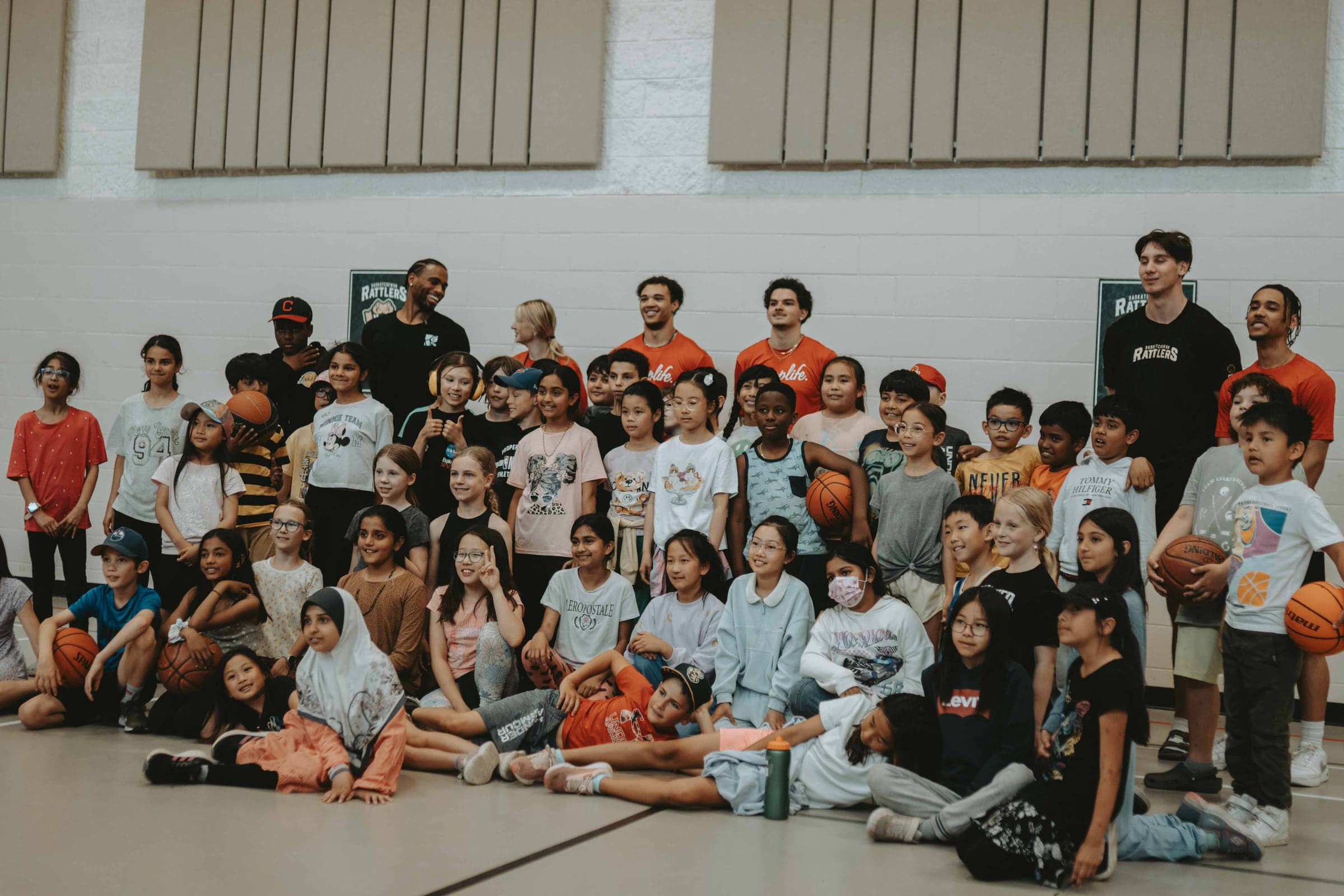
The two days run on HoopLife's written coaching library, the same practice system used with the hundreds of players HoopLife coaches every week in Regina. Every drill is diagrammed, every coach works from the same playbook, and every child keeps a printed training and character development booklet at the end. A senior coach leads the team on the ground and is the person a coordinator deals with for the full visit, backed by additional elite skills coaches sized to the group. Communities that have hosted describe coaches who are involved the whole time, not just running drills and stepping back, and kids who ask when HoopLife is coming back before the coaches have even left.
If a coordinator wants a longer visit than two days, that gets priced out at the estimate stage too. Two days is the standard because it is long enough for kids to actually improve at something and for coaches to build a real relationship with them, rather than showing up as strangers for an afternoon.
What does it cost, and who handles the money?
There is no published price because the honest number depends on where the community is. Driving distance, whether the coaching team stays overnight, whether it flies in, how many days are booked and how many coaches are needed all move the total, and a same-day drive from Regina is a different trip than a fly-in to a northern or remote community. HoopLife quotes every clinic individually with a written, itemized estimate once a coordinator sends in the basics: rough headcount, age spread, and location.
For town and small-city bookings run as a community event rather than a First Nations camp, registration money comes to the local host directly, and HoopLife's team then shows up and delivers the clinic. There is no middleman holding the funds in between.
Getting started
A coordinator does not need firm numbers, a finished gym, or a group that already knows the game to start a conversation. A rough headcount, the ages likely to show up, and a sense of the space is enough for HoopLife to build a real quote. Communities weighing a clinic against other youth programming sometimes find it useful to read about what a basketball clinic actually changes in a community before deciding, since the value for most coordinators has turned out to be less about the jump shots and more about how kids carry themselves afterward.
First Nations communities can start directly through the First Nations basketball clinic page, and towns, cities or schools can start through the Bring HoopLife to You page. Both have a request form that starts the same way: tell HoopLife what you have, and it builds the visit around it.
Frequently asked questions
Do the kids need to already know how to play basketball for a HoopLife clinic?
No. Most kids at a typical HoopLife clinic have never had real coaching before, and coaches group everyone by age and ability on the day so beginners are not stuck behind more experienced players. Nobody sits out for lack of experience.
What if our community only has a small gym or a hall instead of a full court?
HoopLife has run clinics in every kind of space, including community halls and gyms with short floors or hoops that do not lower. A coordinator just needs to mention the space when requesting an estimate, and the clinic gets built around it.
How does HoopLife decide how many coaches to send?
HoopLife sizes the coaching team to the group expected, led by one senior coach who is the coordinator's point of contact for the two days. A rough headcount and age spread when requesting an estimate is enough to plan the team.
How much does a HoopLife clinic cost for our community?
There is no published price because the real cost depends on distance, whether the team drives or flies, how many days are booked and how many coaches are needed. HoopLife builds a written, itemized quote for each community individually rather than publishing a number that would be wrong for most people reading it.
Thinking about your community?
Tell us who to reach out to and a real person from HoopLife will be in touch about bringing basketball to your young people.