Who Approves a HoopLife Clinic: A Guide for Band and School Teams
Who actually signs off on a basketball clinic for your community, what they need to see first, and how to get a written estimate to bring to them.

- HoopLife builds a written, itemised estimate for every community instead of publishing one price, because distance, overnight stays, flights and days all change the number.
- Approval usually runs through whoever controls the funding: band council, a health department, a school principal, or some mix, and that should be identified before a proposal is built.
- The standard clinic is two full days in the community's own gym, with skill work, games, fitness circuits and the Confidence, Leadership and Basketball IQ sessions built in.
- There is no hard cap on participants; HoopLife groups kids by age and ability and sizes the coaching team to the group expected.
- A gym with working hoops and one local point of contact for the two days is what HoopLife needs from the host community.
The person who approves a HoopLife clinic is whoever controls the budget line it comes out of, and in most communities that is not one person. A band council, a health department, an education budget and a school principal can all have a piece of the decision, and the clinic stalls when nobody is sure which door to knock on first. The fastest path is a written estimate in hand before anyone takes it to a meeting, because a real number turns a maybe into a yes or no.
Who actually has to say yes?
It depends on who is paying and who is hosting. If a First Nations community is funding the visit through band or health funding, council or the health department is usually the final approval, even if a youth leader or recreation coordinator is the one who found HoopLife and pushed for it. If a school is hosting, a principal can often say yes on their own for something run during school hours, but anything funded jointly with a band or a municipal rec budget usually needs more than one signature. The honest fix is not guessing, it is asking early who holds the budget before building a proposal around the wrong person.
Leadership turnover makes this harder than it should be. A new coordinator, a principal on leave, or a council that has just changed can mean starting the relationship over even when the community has hosted HoopLife before. None of that is a reason to wait. It is a reason to put everything in writing from the first conversation, so a new decision-maker can pick up the file without having to take anyone's word for it.
What should be in the proposal before it goes to council or the school board?
HoopLife quotes every community individually, because a same-day drive from Regina and a fly-in to a remote community are not the same trip, and a price that is honest for one would be wrong for the other. Driving distance, whether the coaching team stays overnight, flights, how many days are booked and how many coaches are needed all move the number. Request a written estimate and every line is itemised, which is the document a coordinator actually needs walking into a budget meeting, not a verbal ballpark that gets questioned later.
A proposal that answers these questions in advance moves faster through approval:
- How many days: two full days is the standard most communities book, and a longer visit can be priced if that is what is wanted.
- How many kids are expected, even roughly, since that decides how many coaches travel and how many training booklets get printed.
- What the gym looks like: a gym with working hoops and one local point of contact for the two days is genuinely what HoopLife needs to run it, even in a shorter floor or a community hall.
- Who the funding is coming from, so the right approval chain gets looped in from the start instead of discovered halfway through.
Communities that have brought HoopLife back, covered in what the communities that bring us back do differently, tend to be the ones that had this paperwork sorted the first time, which makes the second booking close to automatic.
What does a HoopLife clinic actually look like once it is approved?
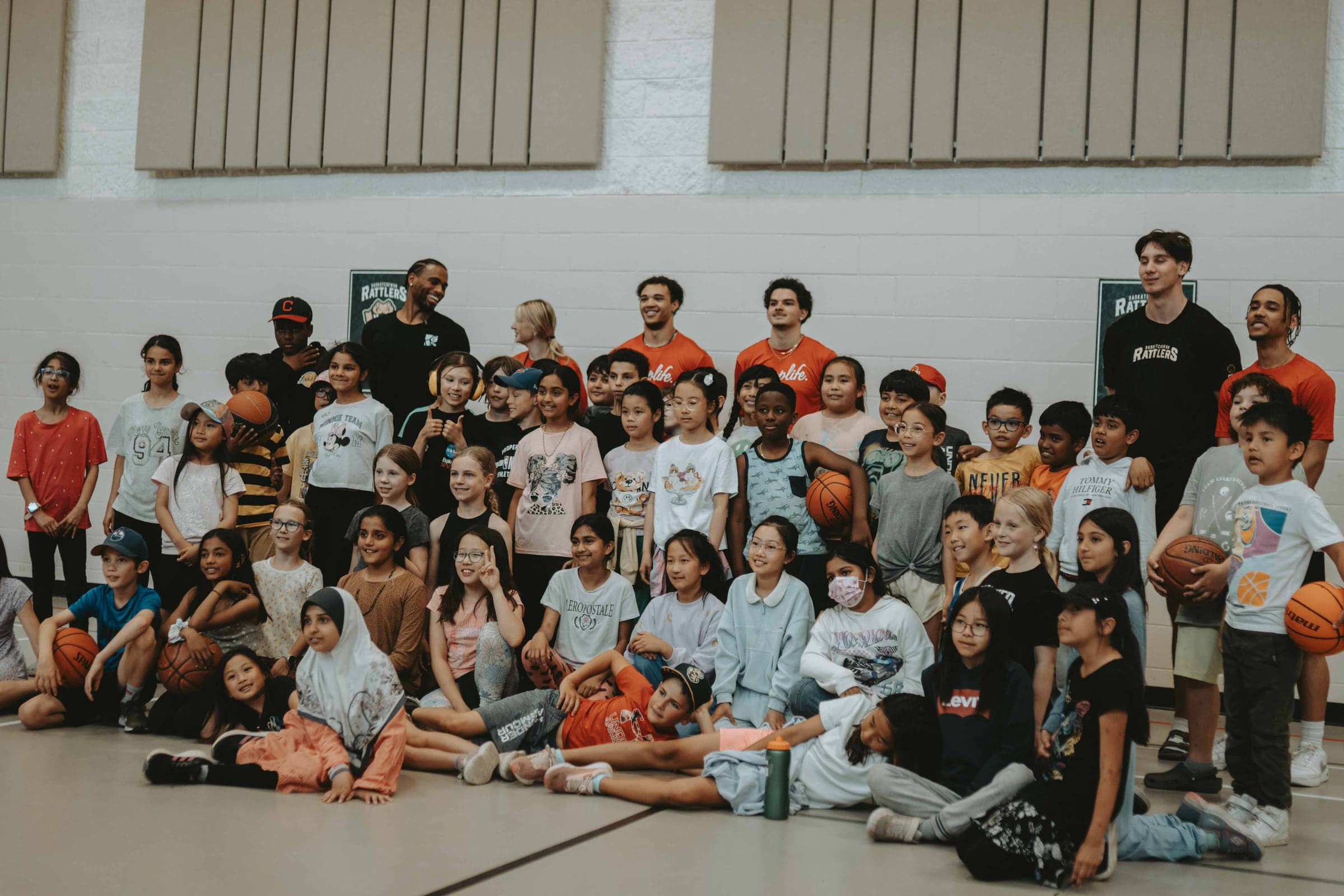
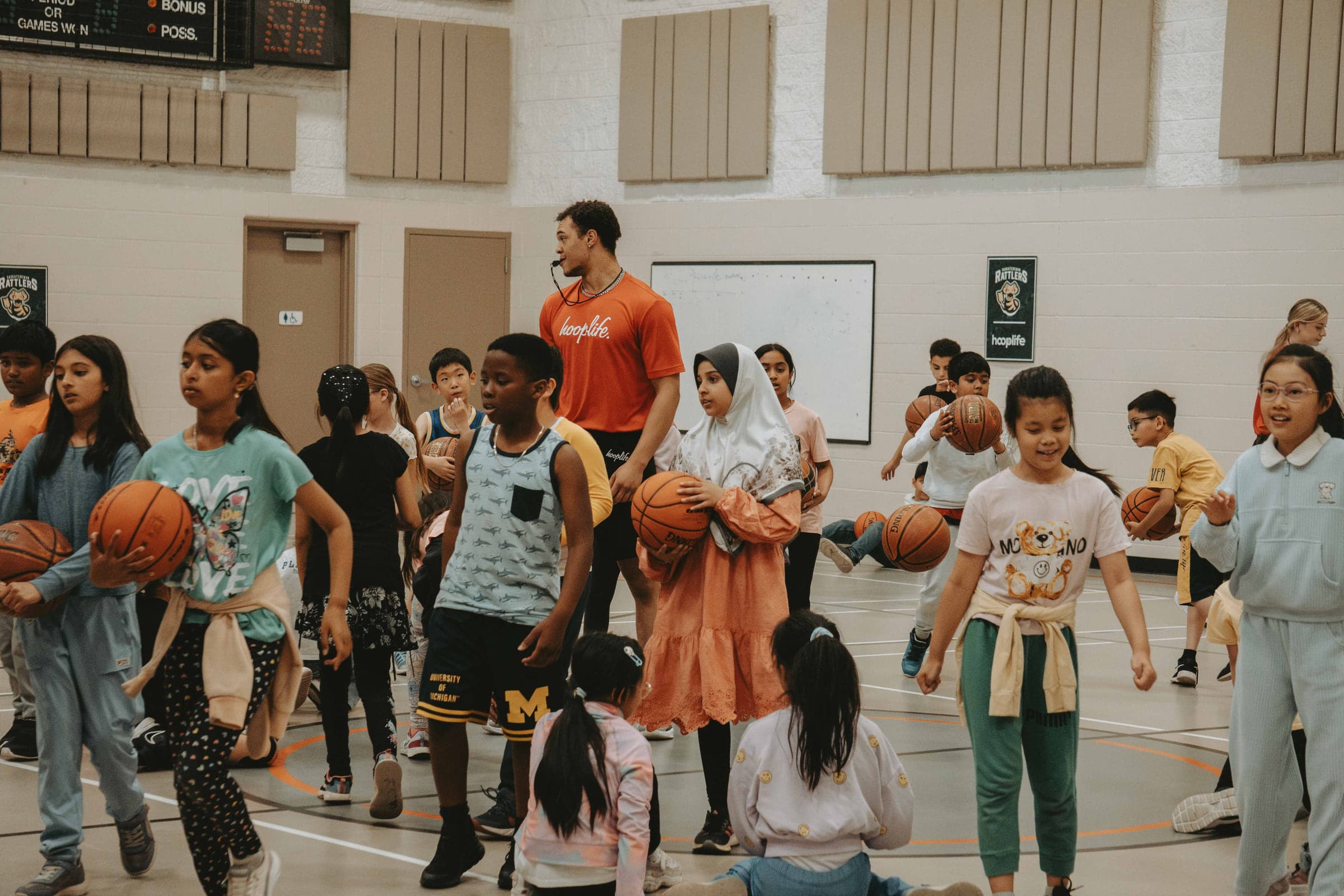
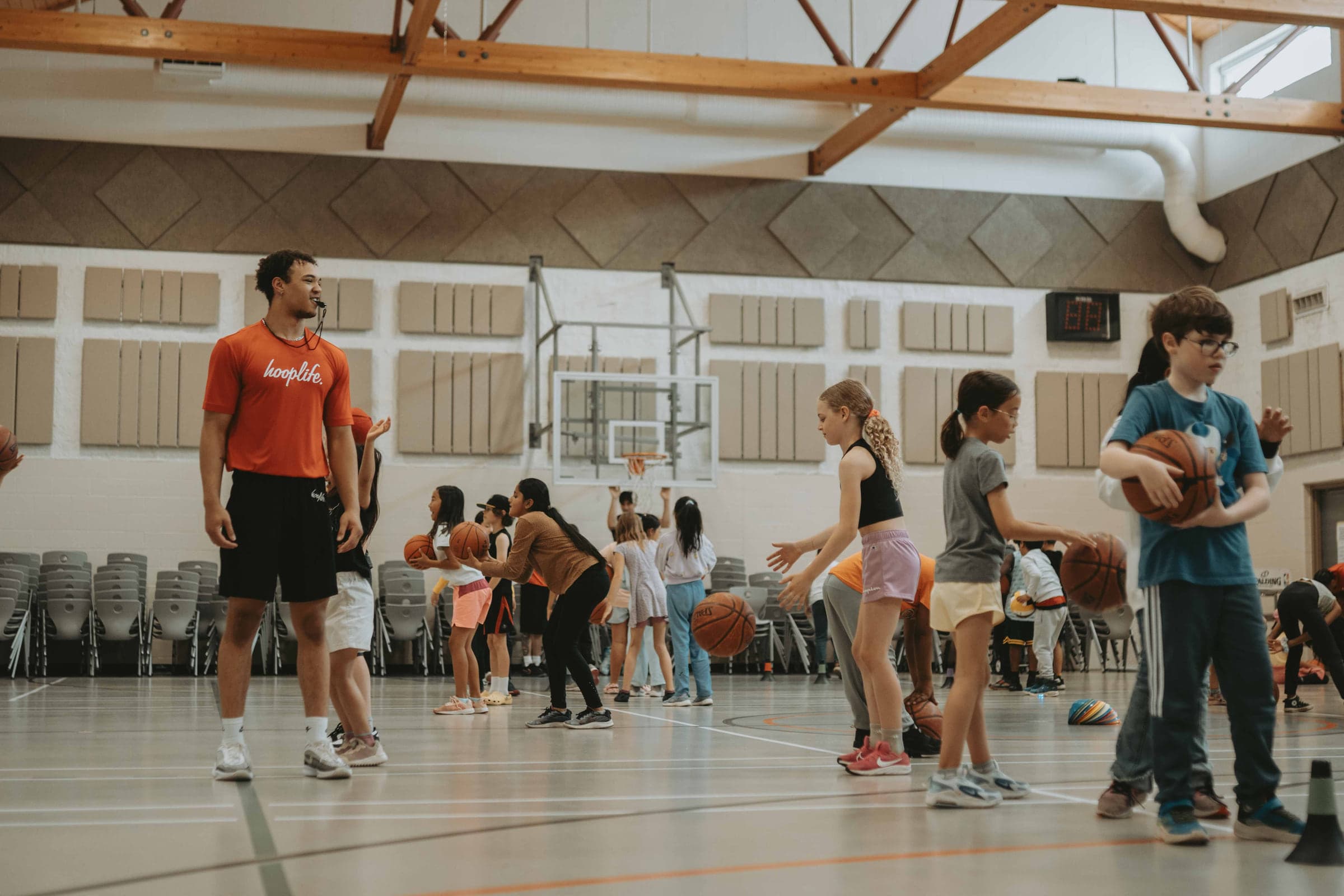
Two full days in the community's own gym. Each day mixes real skill work, shooting, ball handling, finishing, defending, with games and scrimmages so kids use what they just learned right away, plus fitness circuits and the Confidence, Leadership and Basketball IQ sessions built into the day rather than tacked on at the end. A senior coach runs the clinic and is the one your coordinator deals with on the ground, with a small team of HoopLife coaches sized to the group expected. Every child keeps a printed training and character booklet from the same coaching library HoopLife runs on at its own facility in Regina.
There is no hard cap on how many kids take part. HoopLife scales the clinic to the community rather than asking the community to shrink to fit the clinic, and kids are grouped by age and ability on the day, so a beginner never ends up stuck behind a kid who has played for years. Most kids at any given clinic have never had real coaching before, and those are often the ones the two days change the most.
What if daytime, in-school delivery is what actually reaches our kids?
This is worth raising at the proposal stage, not after. A clinic that runs during school and gym hours reaches the whole student population rather than only the kids who already opt into after-school activities, and that framing lands well with band and community leaders because it is not just the already-engaged kids getting another program. If your catchment spans more than one school, say so up front. It changes how the days are planned and how many coaches are sized to the visit, and it is far easier to build into the written estimate than to retrofit afterward.
How to start the approval process
Tell HoopLife roughly how many kids you expect, what your gym looks like, and where the funding is coming from, and a written, itemised estimate comes back for whoever needs to sign off. Whether you are a band office, a First Nations youth leader, a school, or a small-town recreation department, the Bring HoopLife to You page is where that request starts, and the First Nations clinic page has the enquiry form built specifically for band and community funding conversations.
Frequently asked questions
Who should request the clinic estimate if our community has more than one decision-maker?
Whoever is coordinating the visit can request it, but it helps to know in advance which budget the funding will come from, whether that is band council, a health department or a school, so the written estimate can be routed to the right approval chain from the start instead of being passed around after the fact.
Does a HoopLife clinic have to be funded by one source, or can a band and a school share the cost?
HoopLife quotes the visit itself and does not dictate how a community splits the cost internally, so a band, a school and a health department can share funding for one clinic as long as the coordinator and the funding sources are clear when the estimate is requested.
What happens if our coordinator or principal changes before the clinic happens?
Because every estimate from HoopLife is written and itemised, a new coordinator or principal can pick up the file and see exactly what was proposed, which matters in communities where leadership turnover is common and relationships otherwise have to restart from scratch.
Can a clinic run during the school day instead of after school?
Yes, and many communities ask for exactly that, because a clinic held during school and gym hours reaches the whole student population rather than only the kids who already attend after-school programming, which is worth mentioning when requesting the estimate.
Thinking about your community?
Tell us who to reach out to and a real person from HoopLife will be in touch about bringing basketball to your young people.