Inside a Grades 1-2 HoopLife League Practice: What We Teach First
The first practice of the season for the youngest League players, broken down drill by drill.

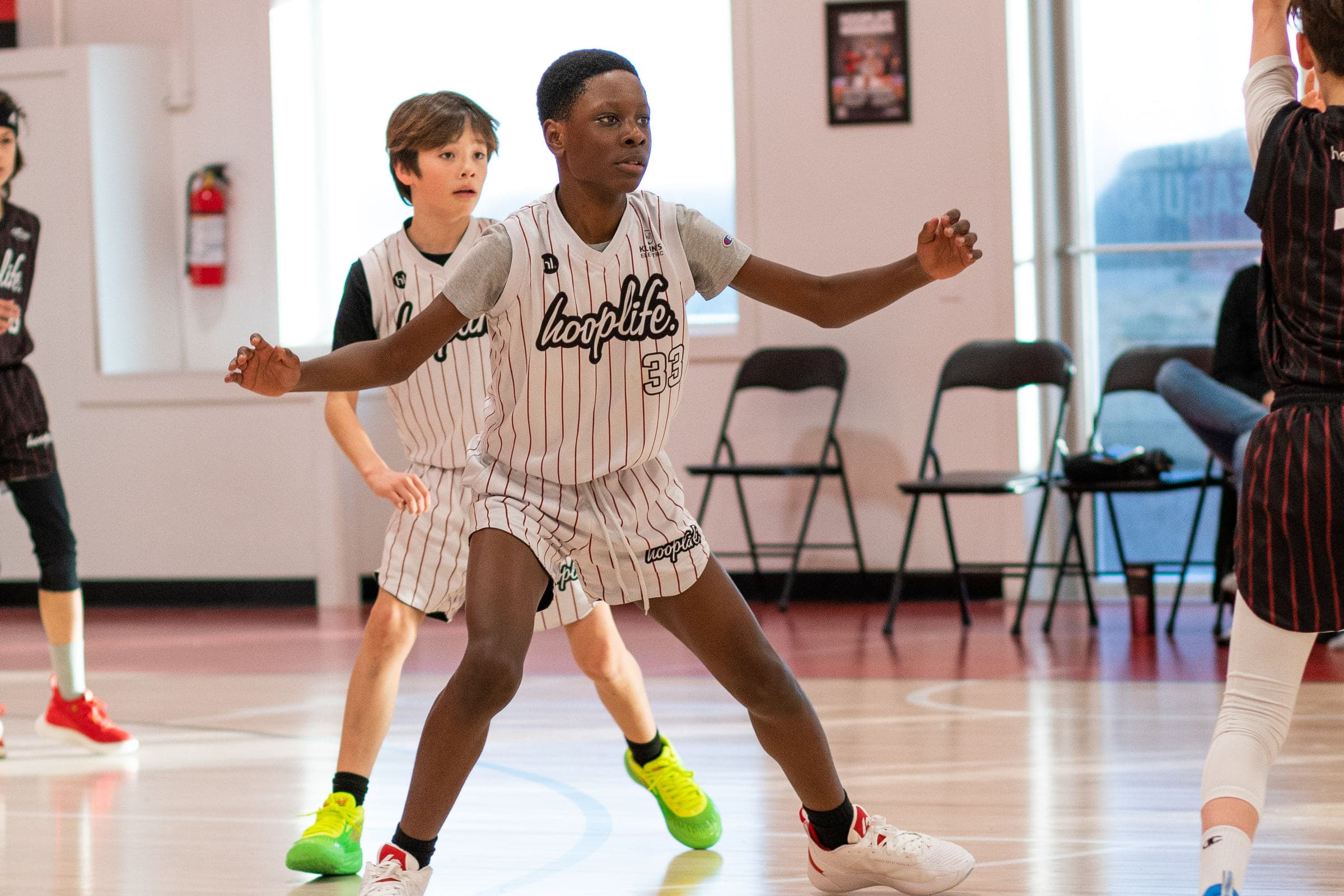
- First practice focuses on three skills: two-hand passing, cutting to the basket, and defensive stance.
- Small-sided games like 2-on-2 and 4-on-4 replace lines, so players get more touches and more decisions.
- Shell drill teaches defenders where to stand as the ball moves, starting with the player guarding the ball.
- Live 4-on-4 at the end lets coaches watch players use what they learned without stopping play.
- Pass-cut-replace is the foundation: pass, cut toward the basket, fill the empty spot.
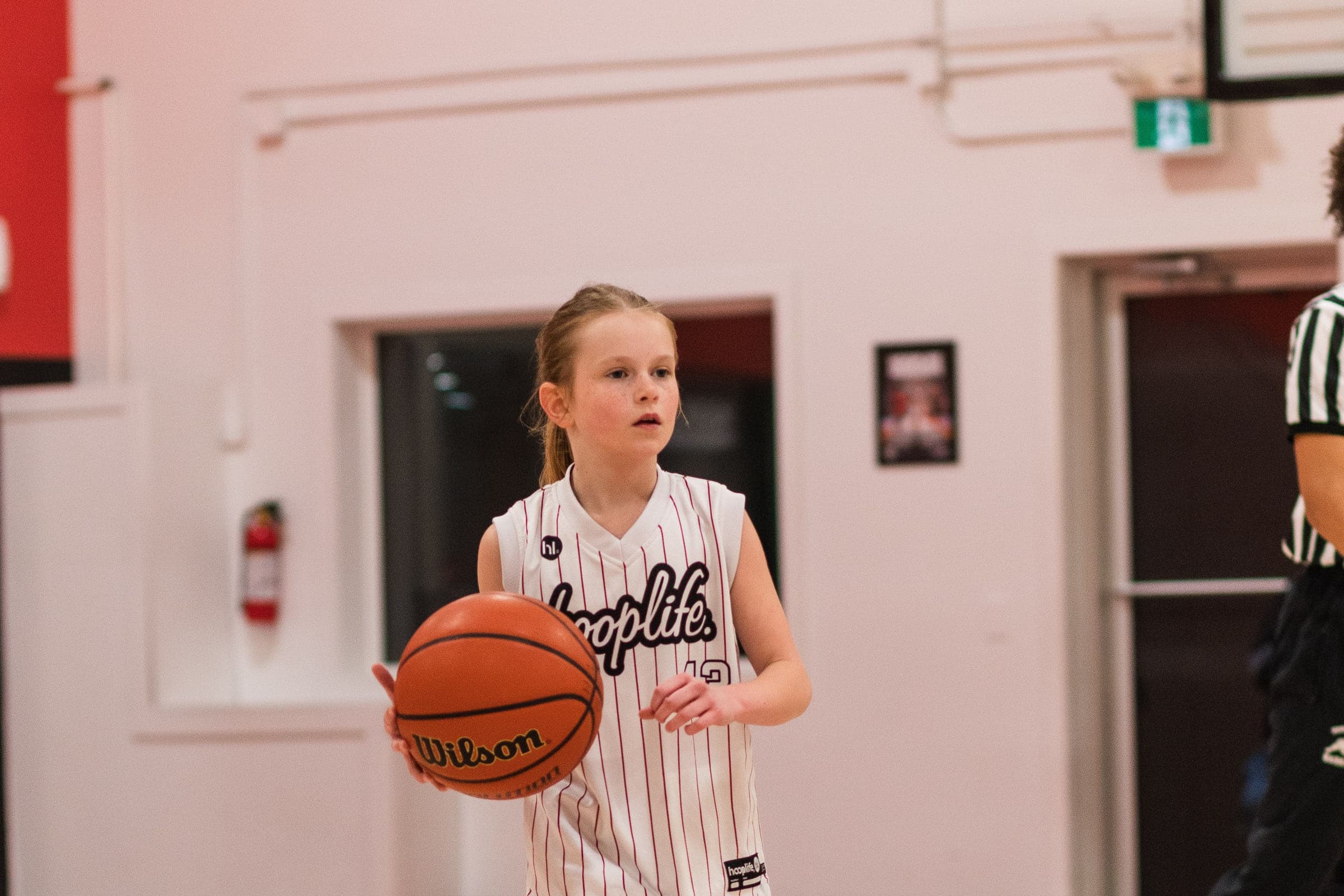
Every HoopLife League night includes a 30-minute training block before games. For grades 1 and 2, the first practice of the season sets the foundation for everything that follows.
This is what happens in that half hour, drill by drill, and why it is built this way.
The Warm-Up: Pass, Cut, Replace
Practice starts with a half-court drill, three players, no defense. One player has the ball. They pass it, cut toward the basket, and score. The player who receives the pass moves to replace the passer's spot.
Two-hand passing only. Right side and left side finishes at the rim.
This is the first pattern we teach because it is the foundation of movement offense. Pass and stand still is what kids do naturally. Pass and move is what we want them to learn.
The warm-up takes 10 to 12 minutes. Players switch sides halfway through.
Shell Drill: Where to Stand on Defense
The next block is a 3-on-3 shell drill, 12 minutes. Shell means positioning. Defenders learn where to stand as the ball moves around the perimeter.
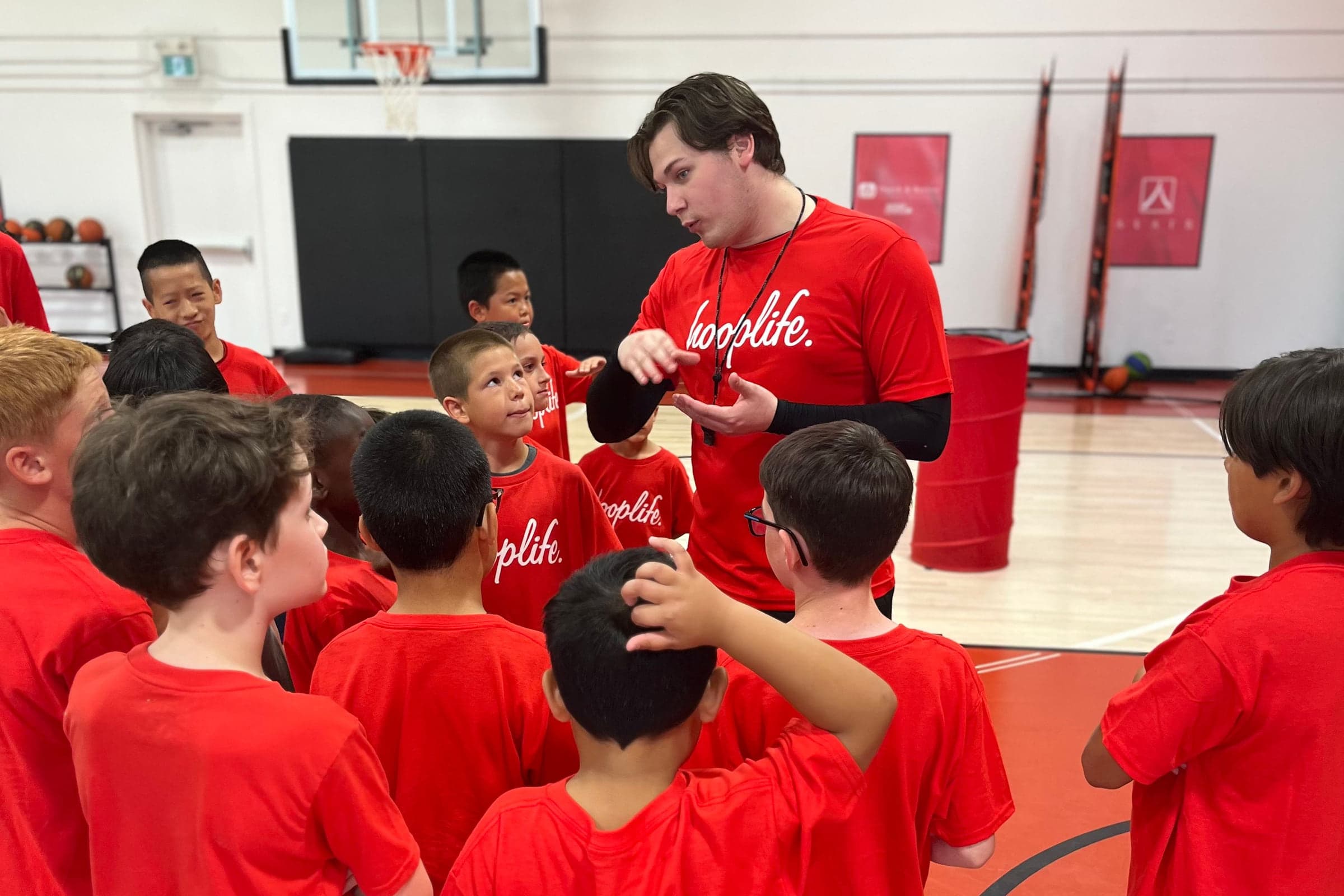
The main focus at this age is the player guarding the ball. Defensive stance matters: knees bent, hands up, two slides only. We do not ask for more than that yet.
Off-ball defenders learn flat triangle positioning. When the ball moves, they shift. The triangle shape stays.
This is the drill where coaches teach that defense is not chasing. It is positioning, then reacting.
2-on-2 Live: Offense and Defense Together
Next is 2-on-2, half court, 10 to 12 minutes. Same rules on defense as the shell drill. Offense runs pass-cut-replace.
Defense plays at 60 percent. That means defenders are in the right spots and moving, but not pressuring so hard that offense cannot complete a pass or a layup.
The coach is involved, meaning they might fill in as a third offensive player or reset the drill as needed. The goal is repetition with light resistance.
Coaches remind players to talk. Call out when you are guarding the ball. Call out when you are off the ball and shifting.
Why 2-on-2 Instead of Lines
Small-sided games give players more touches, more decisions, and more chances to fail and correct. A player in a 2-on-2 drill will make five decisions in a minute. A player in a layup line will make one.
This is why HoopLife League practice is built around 2-on-2, 3-on-3, and 4-on-4 instead of stations and lines.
4-on-0 Passing and Footwork
The next drill is four players, no defense. It starts half court for 10 minutes, then moves to full court for seven.
Spacing is two wings, two slots. The ball starts in a slot. Players pass and cut, two-hand passes only.
On the catch, players work on simple footwork: a jab step or a shot fake. Nothing complicated. Just the habit of doing something with your feet when you catch the ball.
This is where we start teaching that catching the ball is not the end of the action. It is the beginning.
4-on-4 Shell With Cuts
Then it is 4-on-4 shell, half court, 10 minutes. Same as the 3-on-3 shell, but now with four offensive players making cuts and four defenders shifting.
Coaches watch for the same things: on-ball defender in a stance, off-ball defenders in position, offense moving after the pass.
4-on-4 Live Game
The final block is a live 4-on-4 game, half court, 12 to 15 minutes. Coaches do not stop play often. Instead they correct on the way, calling out reminders while the game continues.
The goal is to let players use what they practiced in the earlier drills. Pass-cut-replace. Defensive stance. Off-ball positioning.
This is where the lesson becomes a habit.
What You Can Run at Home
If you have two players and a ball, you can run the pass-cut-replace drill from the warm-up.
One player starts at the top of the key. One player is on the wing. The player at the top passes to the wing, cuts to the basket for a return pass, and finishes. Then they switch spots and go the other way.
Two-hand passes. Right hand and left hand finishes.
Doing it right means the cutter is moving toward the basket as soon as the ball leaves their hands. No pass and wait. Pass and go.
You can also run this at open gym, adding a third player to make it 3-on-0 like the warm-up. Open gym spots are popular and they do sell out, so grab one while you can.
Why Practice Is Built This Way
Every drill in this practice connects to the next one. Pass-cut-replace in the warm-up becomes pass-cut-replace with defense in 2-on-2. Shell positioning becomes shell with cuts. Then everything shows up in the live game at the end.
Nothing is random. Every block prepares the player for the next one.
That is what a training block does. It builds one skill at a time, then asks the player to use all of them together.
This is the first practice of the season. The drills will get more complex as the 10 weeks continue, but the foundation stays the same: move after you pass, stay in your stance, talk on defense.
For a player in grades 1 or 2, that is what good basketball looks like, and it is why HoopLife League spots are limited and they do go. Grab your player's spot while it is still open.
Frequently asked questions
What does shell drill mean in basketball?
Shell drill is a positioning drill where defenders learn where to stand as the ball moves around the perimeter. Offensive players pass the ball but do not attack the basket yet. The focus is on defenders shifting and maintaining the right spacing, usually in a flat triangle shape off the ball. At HoopLife, younger players in grades 1 and 2 start with the player guarding the ball in a proper stance, then add off-ball positioning as they improve.
Why does HoopLife use small-sided games instead of layup lines?
Small-sided games like 2-on-2 and 4-on-4 give players more touches, more decisions, and more chances to learn. A player in a 2-on-2 drill will handle the ball, pass, cut, and defend multiple times per minute. In a layup line, they might get one turn every few minutes. HoopLife League practice is built around small-sided games because that is how players improve faster.
What is pass-cut-replace in basketball?
Pass-cut-replace is an offensive pattern where a player passes the ball, immediately cuts toward the basket, and then fills the empty spot left by another player. It teaches movement after the pass instead of standing still. This is the first pattern HoopLife teaches in grades 1 and 2 because it is simple, repeatable, and the foundation of spacing and ball movement.
Can a parent run any of this practice at home with their child?
Yes. The pass-cut-replace drill from the warm-up works with two players and a ball. One player starts at the top of the key, one on the wing. The player at the top passes to the wing, cuts to the basket for a return pass, and finishes with a layup. Then they switch sides. Use two-hand passes and finish with both the right and left hand. Doing it right means the cutter moves as soon as the ball leaves their hands, not after.
Want the details for your kid?
Leave your info and a real person from HoopLife will send the details and answer your questions. Spots are limited and they do go.