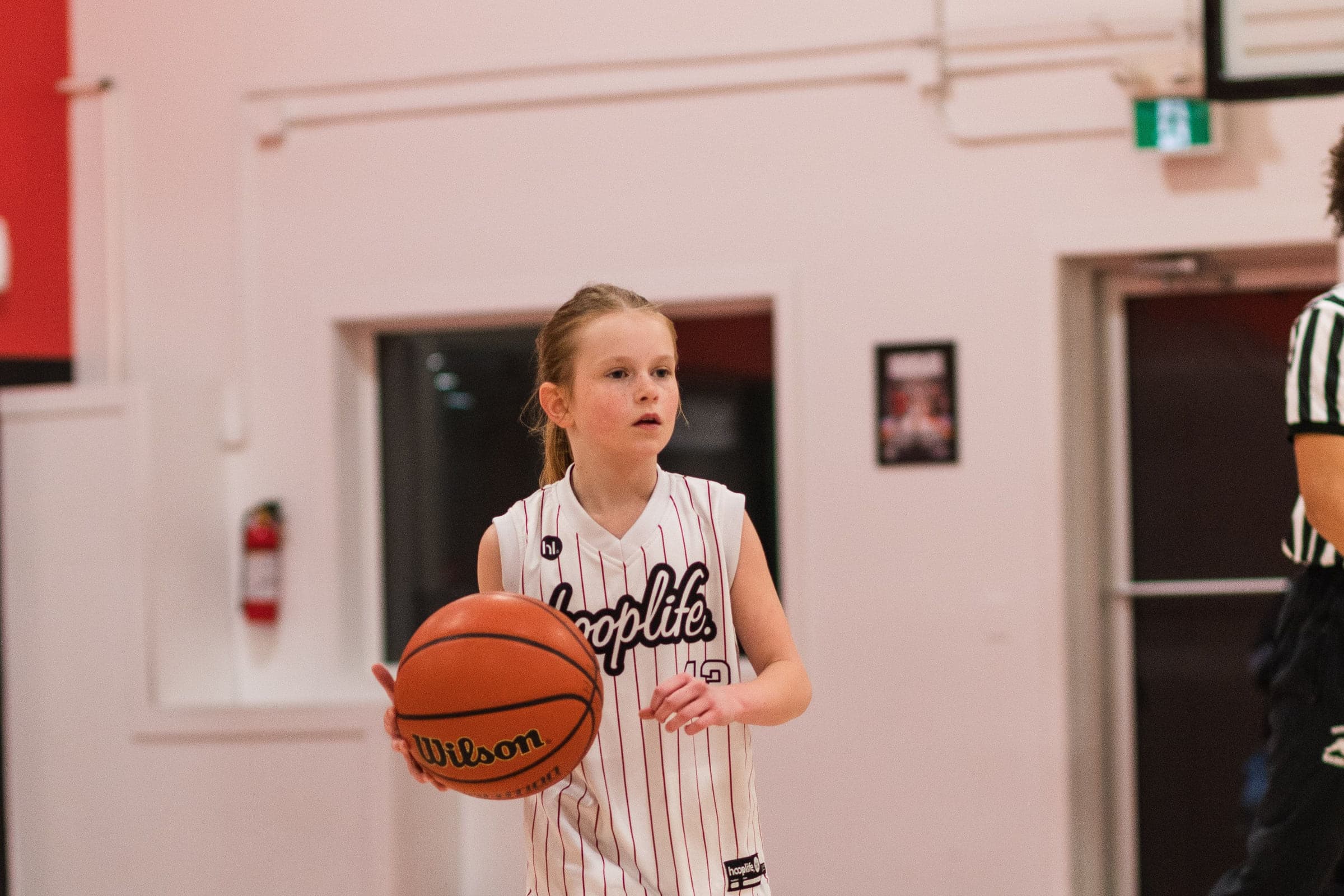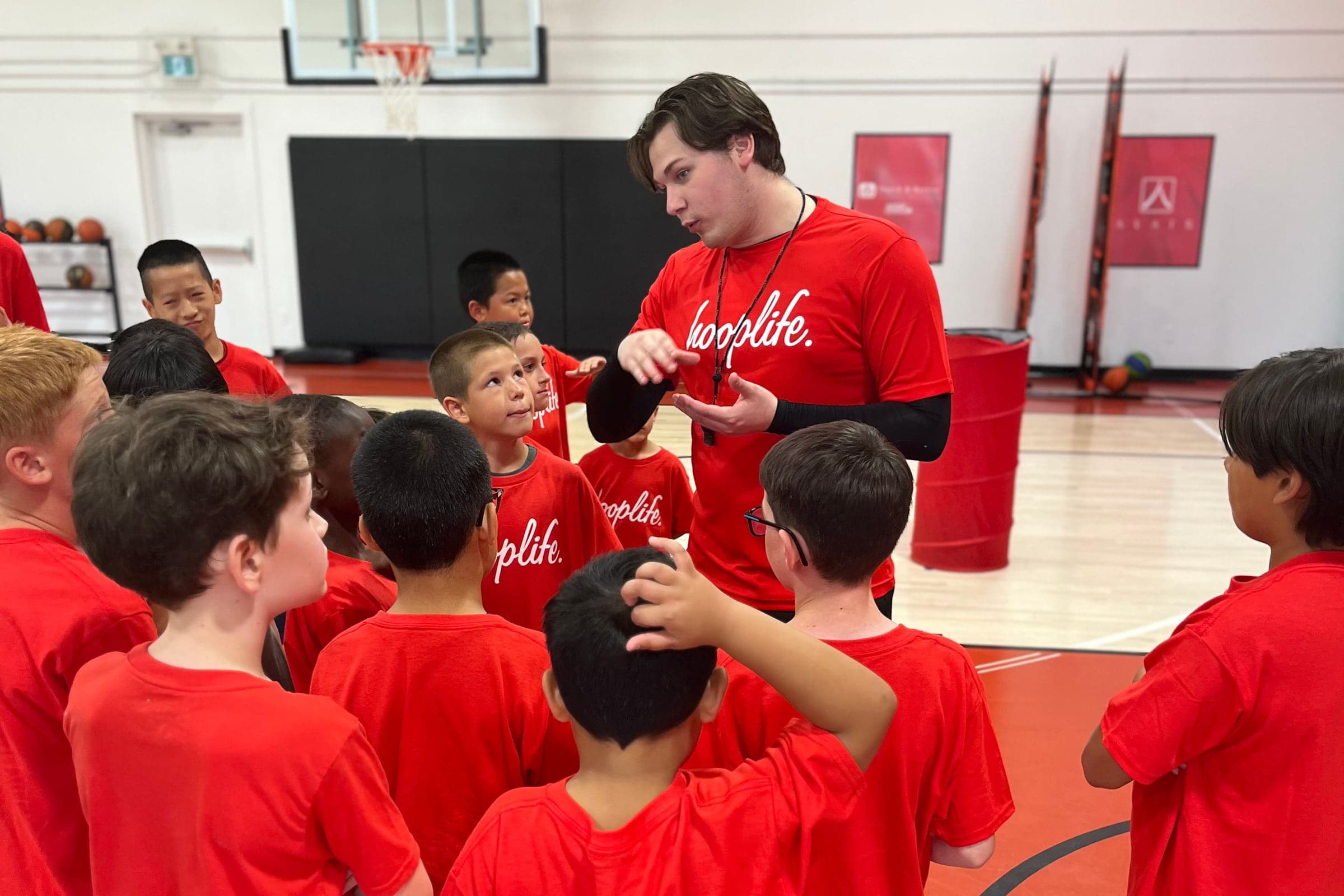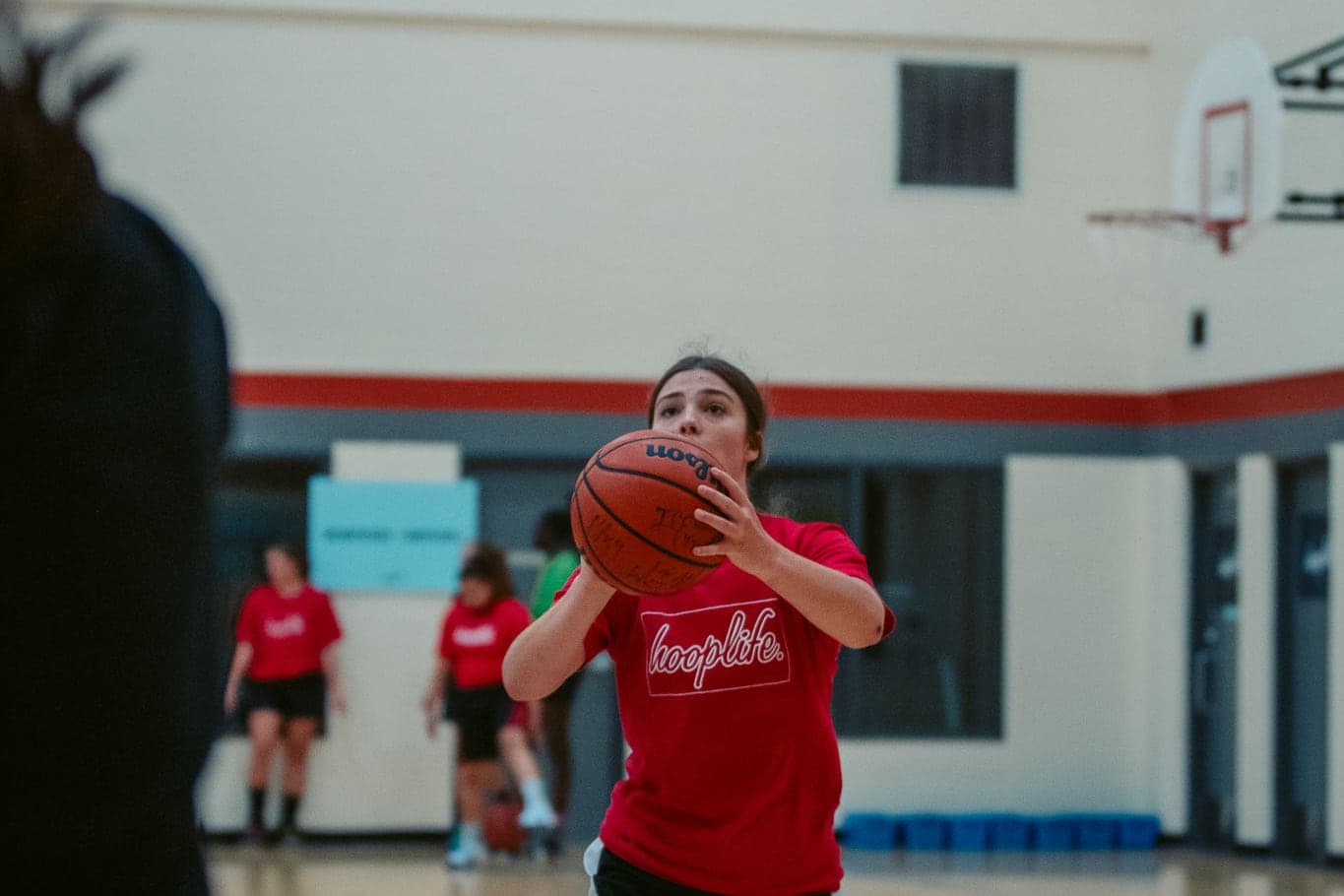
The HoopLife Method: Grades 5-6 Practice #4, BLOB to Full Court
A real HoopLife League practice plan for grades 5-6, explained in plain language: what each block teaches and why it runs this way.

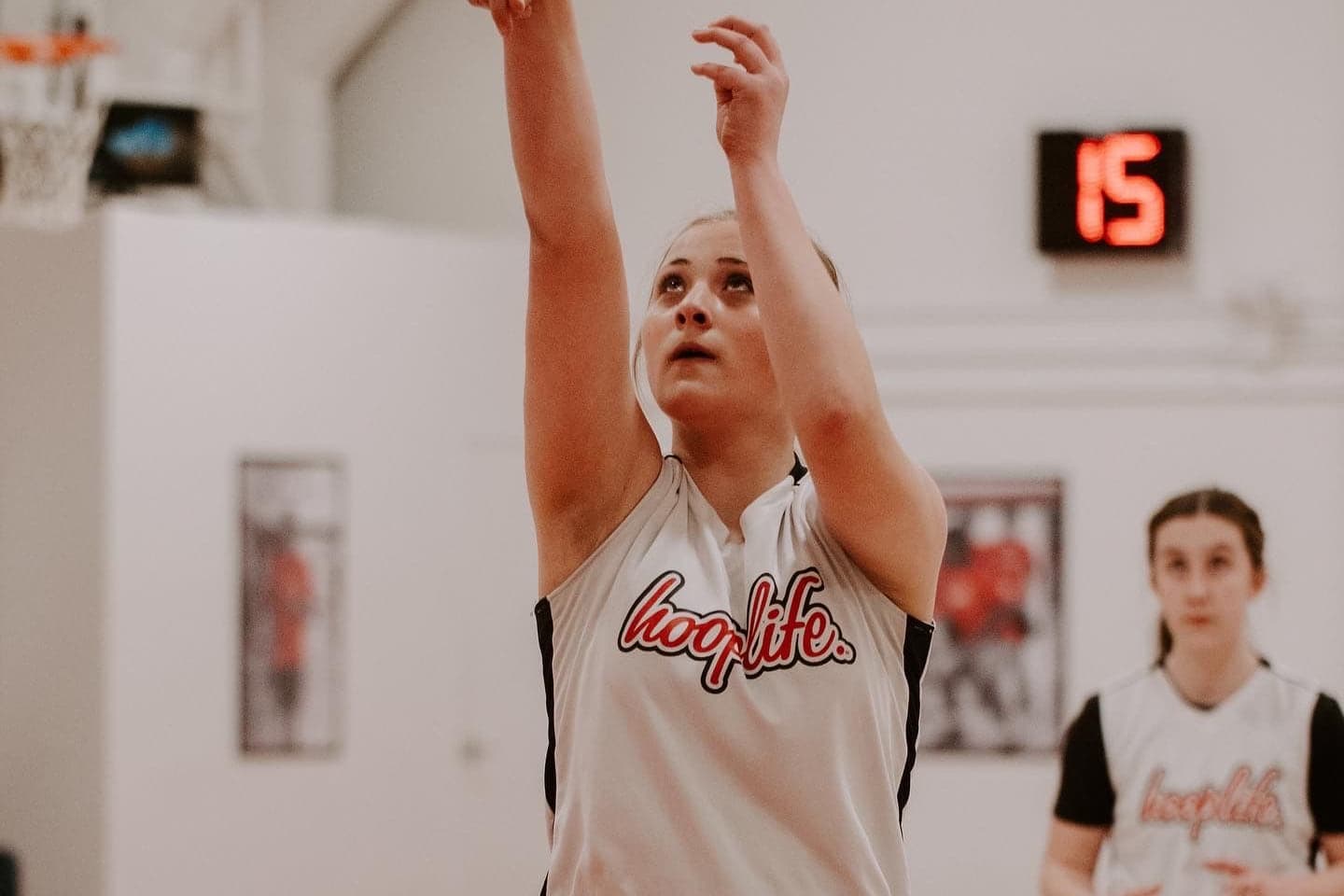
- The warm-up teaches four specific defensive reads off a dribble-screen: Late, Over, Under and Switch, each with its own correct offensive answer.
- The baseline out-of-bounds play is installed with no defense first (5x0), then tested against defense in half court before it ever goes full speed.
- Every block in the practice is small-sided, 2x2 or 5x5, so the coach can watch individual decisions instead of running lines.
- The same out-of-bounds play scales into full-court 5x5 combined with screening action and post options later in the practice.
- HoopLife's weekly basketball training sessions in Regina are capped at 8 players per level and do sell out, so signing up early matters.
Practice #4 for the HoopLife League's grades 5-6 division teaches one thing above all: how to read a screen instead of just running a play. It starts with a defensive reading drill, builds an out-of-bounds play from scratch, then turns that same play loose into full-court 5x5. Every block is small-sided, because the coach needs to see the decision each player makes, not just the result.
What the warm-up actually drills
The first 12 minutes are 2x2, defense reading what the coaches call DS action, a dribble-screen where the ball handler uses a teammate's screen. The defense is taught four answers, and only four: Late, Over, Under, Switch. Late means the defender fights through late and the offense should curl wide. Over means the defender goes over the top tight, so the offense curls tight. Under means the defender ducks under the screen, which tells the shooter to stop and shoot right there instead of fighting to the rim. Switch means the defenders trade players, and the offense should hunt the mismatch that creates.
This is the whole idea of the practice in miniature. The defense is not told to stop the play, it is told to pick one of four real answers, and the offensive player's job is to read which one just happened and punish it correctly. A grades 5-6 player who can read Over versus Under on a ball screen is doing something most adult rec players never learn.
Why the play is built in 5x0 before anyone defends it
Drill #2 is 10 minutes of 5x0, meaning no defense at all. The team installs a baseline out-of-bounds play, a simple one, run from a box alignment with each player in a position-specific spot. Players run it from both sides of the floor so nobody only knows it one way, and at this stage there is only one option off of it. The coach wants five bodies who know their spot cold before a single defender gets added, because a player who is still thinking about where to stand can't also think about reading the defense.
Once that is clean, drill #3 adds defense: 12 minutes of 5x5 half court, running that same out-of-bounds play "to perfection." The coaching point here is advantage. The play is designed to create one, and the players are taught to see it and use it, not just run the pattern and hope.
Why this scales up to full court, not down into lines
The last two blocks are where it comes together. Drill #4 takes the same baseline play and lets it flow into full-court 5x5, with two floors running at once so more players stay in the action, and it adds a second layer: the DS screening action from the warm-up, now combined with post options, two full sets, and a "fist" concept. Drill #5 closes with 12 minutes of full-court 5x5, two options on offense, and any foul sends the team straight back to a baseline out-of-bounds restart instead of stopping the clock to talk.
Notice what never happens in this practice: nobody stands in a line waiting for a rep. Every block is 2x2 or 5x5, live, with a coach watching how a specific player reads a specific situation. That is the whole philosophy behind a HoopLife League practice: more touches, more decisions, every minute planned, nobody standing around.
What a player can actually take home from this
A parent or a player can run a version of the warm-up drill alone or with one other person at open gym: have a partner set a screen on a dribble handoff, and practice all four reads on purpose. Fight over the top tight and curl tight. Go under and pull up right there instead of trying to force the rim. Get switched and immediately look for the smaller or slower defender instead of running the same move anyway. Doing it right looks like a player who changes their answer based on what the defense actually did, not one who runs the same move every single time. That single habit, reading before reacting, is most of what separates a player who has played a season from one still learning the game.
The out-of-bounds play piece is harder to replicate without four teammates and a coach calling it, but the structure is worth understanding either way: learn your spot with no defense first, then add defense once the spot is automatic, then take it to full speed. That is how HoopLife's weekly basketball training sessions are built too, skill first in a smaller group, then live play once it is clean. Those sessions are capped at 8 players per level in Regina, and they are popular enough that they do sell out, so a family that wants a spot should sign up as soon as they can rather than wait and hope one opens.
The HoopLife League itself runs the same way this practice plan does: a training block every week, built by a head coach from a written practice book, followed by real games. If a player in Regina is in grades 5-6 and ready for a season built on practices like this one, the HoopLife League page has the divisions and the Register button. League spots are limited by team size, and the divisions that fill tend to be the busiest grades, so it is worth getting a name in rather than waiting.
FAQs
Frequently asked questions
Why does the practice start with no defense at all?
Because a player who is still figuring out where to stand cannot also read a defender. HoopLife installs the grades 5-6 baseline out-of-bounds play in 5x0, no defense, from both sides of the floor, so every player's spot is automatic before defense gets added in the next drill.
What do Late, Over, Under and Switch actually mean for a young player?
They are the four ways a defender can play a screen, and each one has a different correct answer for the offense. Late means the defender is slow to the screen, so the offense curls wide. Over means the defender fights over the top tight, so the offense curls tight. Under means the defender goes underneath, so the shooter stops and shoots immediately. Switch means defenders trade players, so the offense looks for the mismatch it just created.
Why does HoopLife run 5x5 instead of lines and layup drills?
Small-sided, live play puts the ball in a player's hands constantly and lets a coach see the actual decision a player makes under real defensive pressure, not just a rehearsed move with no defender reacting. Every HoopLife League practice, grades 5-6 included, is built this way.
Is HoopLife's weekly skills training the same as the league practice?
They are related but separate. The HoopLife League is a 10-week season with a training block and games every week, built from a written practice book like the one described here. Weekly basketball training sessions in Regina are a separate year-round option, capped at 8 players per level, and they run alongside or instead of a league season depending on what a family wants.
Want the details for your kid?
Leave your info and a real person from HoopLife will send the details and answer your questions. Spots are limited and they do go.