Why Small-Sided Games Beat Drills in Youth Basketball
HoopLife League practice is built around 3v3 and 4v4 instead of lines and cone drills. Here is why.

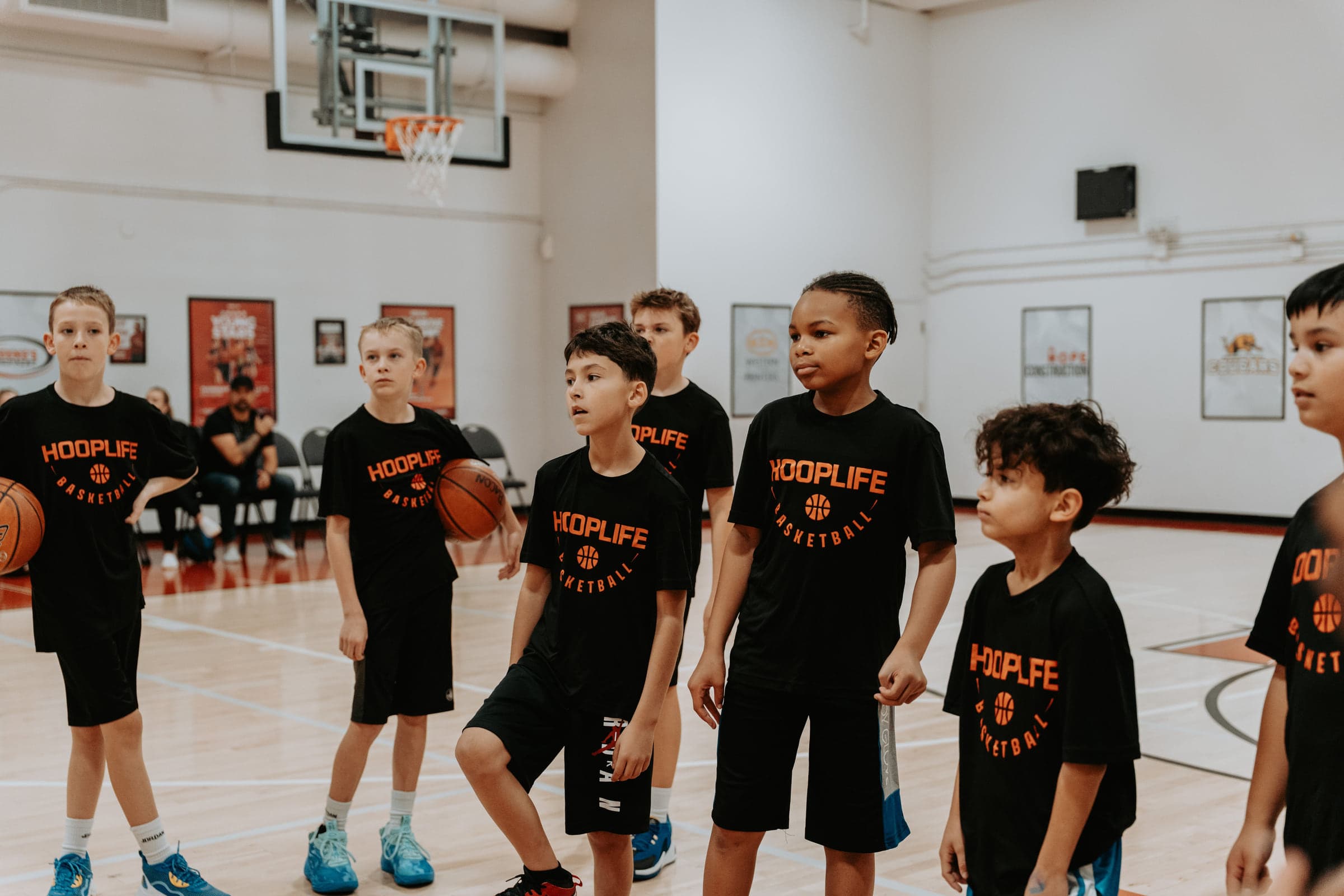
- Small-sided games like 3v3 and 4v4 give every player more touches, more decisions and more pressure than full-court scrimmages.
- HoopLife League practice blocks move from no defence to live competition in the same concept, so players learn the skill before they apply it under pressure.
- Every drill in a HoopLife practice is timed or scored, so players learn to execute when it matters.
- The dribble hand-off is taught first in a 3v0 drill, then added to transition in 4v0, then played live in 4v4 on the same night.
- You can run a 4v0 transition drill at open gym with three friends: pass ahead, drive or swing back, drive or swing and hand-off.
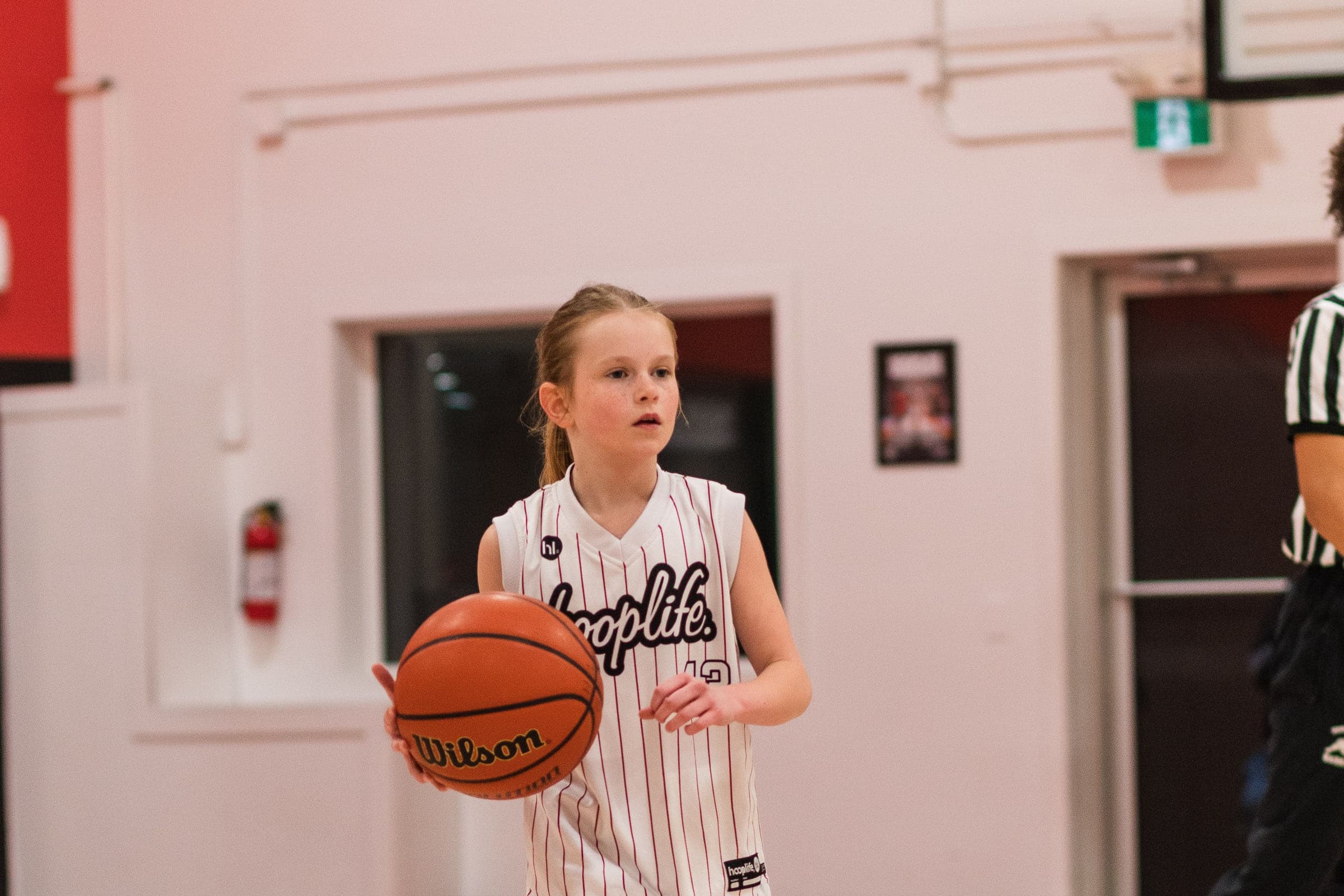
Most youth basketball practice looks like lines. Players wait their turn to shoot a layup, then jog to the back and wait again. HoopLife League practice is built the opposite way: small-sided games where every player is moving, deciding and competing most of the time. A typical grades 3-4 practice runs 3v3 and 4v4 drills, not because they are easier to organize, but because they teach the game faster — and it's part of why HoopLife spots are limited and divisions do fill.
Small-sided games give every player more touches. In a full 5v5 scrimmage, a young player might touch the ball three times in five minutes. In a 4v4 half-court game, that same player makes a decision every ten seconds. More touches means more chances to learn, more mistakes to correct and more repetition of the skill the coach is teaching that night.
How a HoopLife Practice Builds From Zero Defence to Live Competition
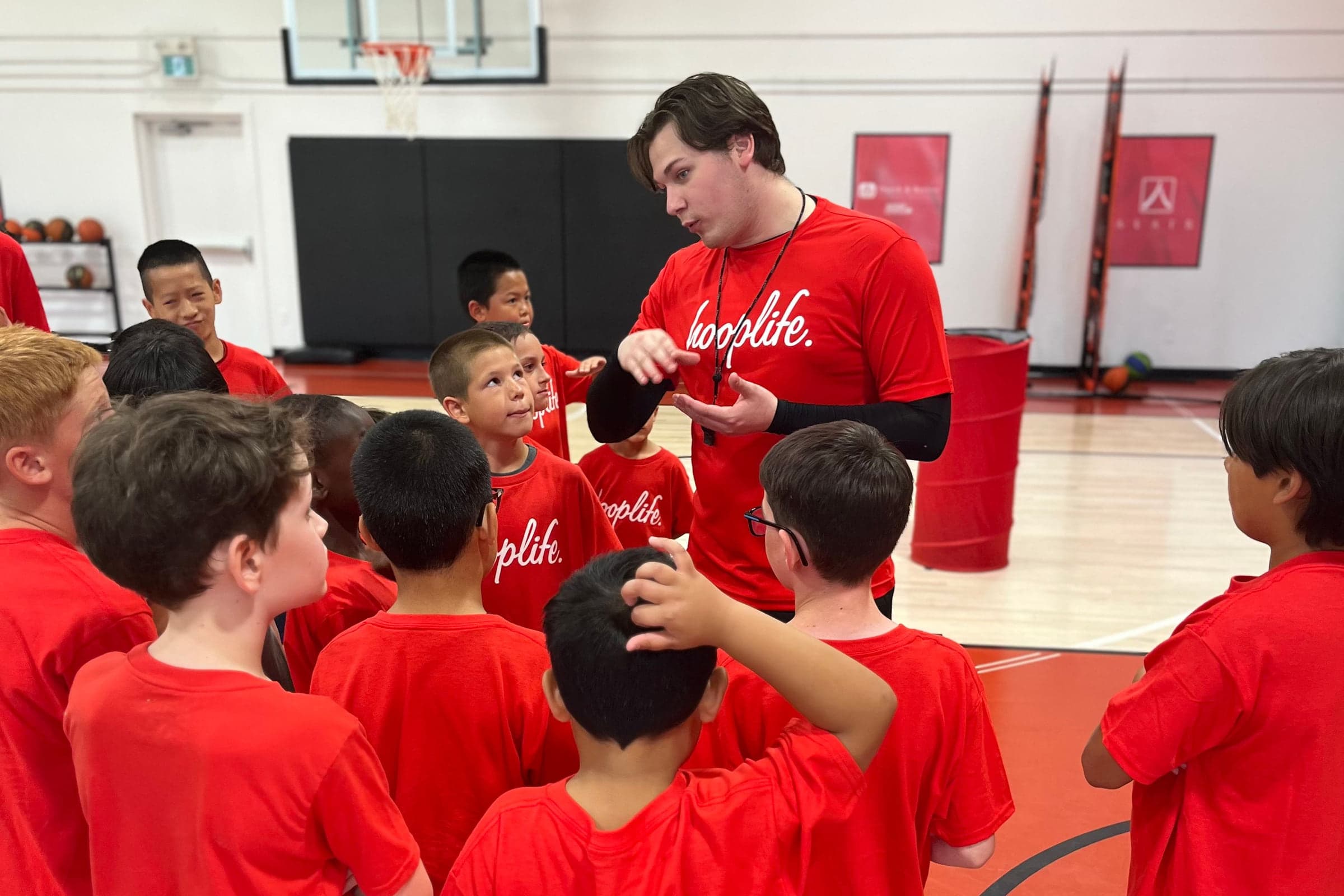
Every practice starts with a concept taught at zero speed, then adds pressure in layers. A grades 3-4 practice opens with a 12-minute warm-up that runs from 60 percent speed to full speed. The first teaching block is a 4v0 drill: four players, no defence, running a fill pattern where two players start high in the corners and two start on the wings. One player passes off the dribble, drives to touch the paint, and kicks out to the opposite wing. The corner drifts as the ball moves. Players respace and run it again.
That 4v0 block teaches the shape of the play without any pressure. The next block adds one new skill: the dribble hand-off. In a 3v0 drill, three players work on the technique of a hand-off from the slot to the wing. The cutter works on body position and footwork, making a V-cut to create separation. The ball handler works on angles, hand position and creating space. Every hand-off finishes in the two-point area. No defence, just repetition of the mechanic.
Then the two pieces combine. A 4v0 transition drill adds the dribble hand-off on the second swing. Players run the same fill pattern from the warm-up, but now the second pass leads to a hand-off instead of a drive. The coach watches for the technique taught in the previous block: is the cutter using a V-cut, is the ball handler creating the right angle, does the play finish in the paint.
After 10 minutes of that, the same concept goes live. A 4v4 half-court game runs the transition concept under pressure: pass ahead and drive, or swing back and drive, or swing and hand-off. Now there is defence, now there is a score, now the play has to work when someone is trying to stop it. The coach corrects on the fly instead of stopping the drill every time. Players learn to execute the skill they were just taught, in a game that looks like a real game.
Why Every Drill Is Timed or Scored
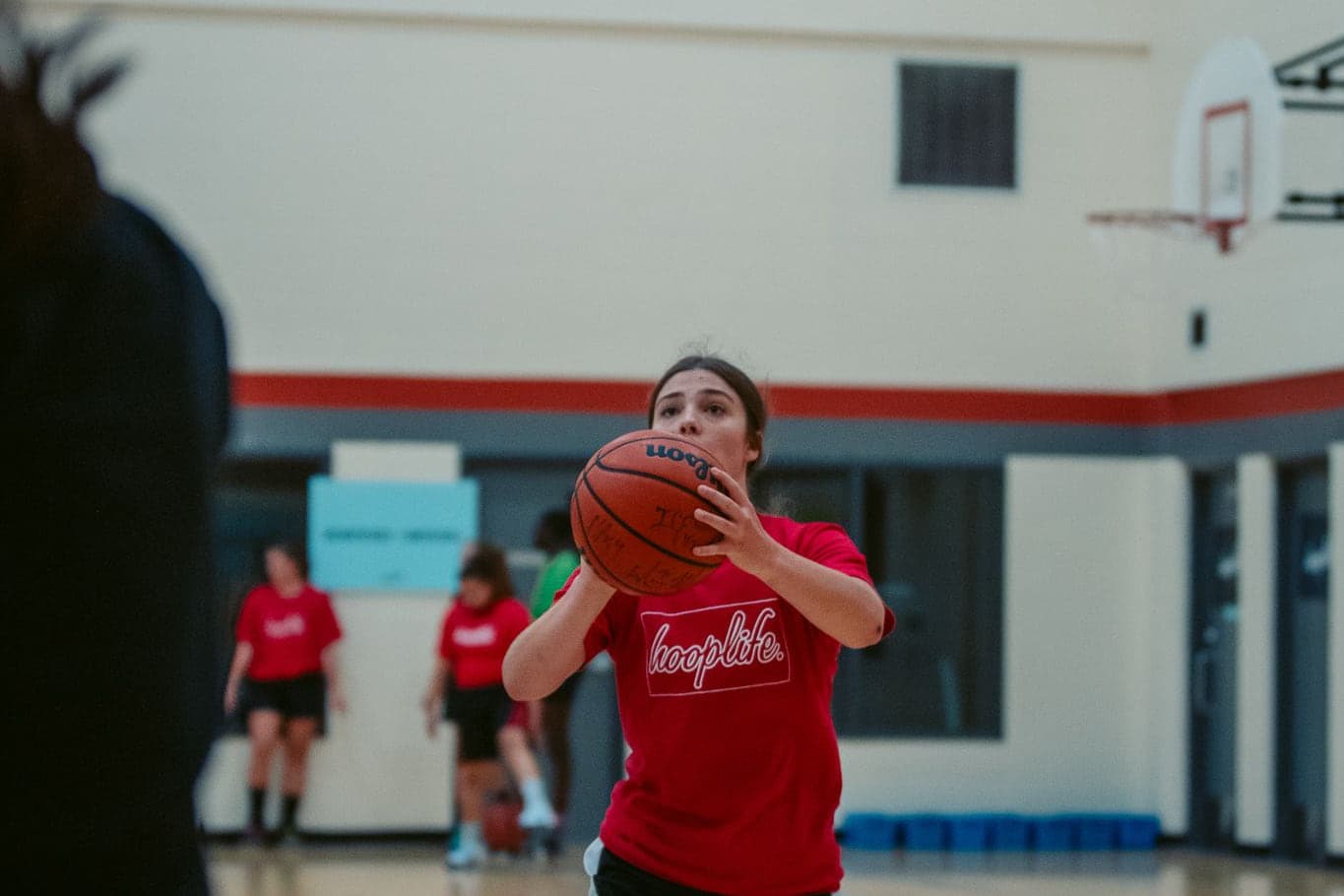
A HoopLife practice does not run drills for the sake of running drills. Every block has a competitive element: a timer, a score, a target number of passes or makes. Pressure teaches players to execute when it matters. A hand-off drill that has no consequence teaches a player how to hand the ball off in an empty gym. A hand-off drill where the team has 30 seconds to score five baskets teaches a player how to hand the ball off when the clock is running and the defence is live.
The same principle applies to the final block of practice. A 5v0 half-court drill teaches a motion concept: four players out, one player inside cutting opposite the ball. A pass triggers a cut, and the second pass leads to a hand-off. Players run it at speed with no defence for 12 to 15 minutes, focusing on cutting speed and hand-off technique. Then it goes live in a 5v5 half-court game for the last 15 to 20 minutes of practice. Same concept, same cuts, same hand-offs, but now the defence is trying to stop it and the score matters.
Small-sided games also mean more defensive repetitions. In a 4v4 game, every player has to guard someone most of the time. In a full-court 5v5 game, a player can drift to the weak side and never close out. The tighter the game, the harder it is to hide, and the more a coach can see what a player actually knows.
What You Can Run at Home or at Open Gym
The 4v0 transition drill from this practice translates cleanly to open gym. You need three other players and a half court. Start with two players high in the corners and two on the wings. One player passes off the dribble, drives to the paint, and kicks out to the opposite wing. The corner player drifts as the ball moves. After the kick, players respace to the same spots and run it again. Add the dribble hand-off after a few reps: on the second swing, the player with the ball hands it off to a cutter coming from the slot to the wing instead of driving.
Doing it right means every player touches the ball, every cut is at full speed, and every hand-off creates a scoring chance in the paint. If the drill turns into players standing and passing the ball around the perimeter, reset and run it again. The point is not to complete the pattern, the point is to move like you would in a game.
HoopLife League practice runs one day a week in fall, winter and spring, and every day includes a 30-minute training block, a confidence and leadership workshop, and two games of 3v3 or 5v5 depending on grade. Players are grouped by age and ability, and spots in each division are limited and divisions do fill. Learn more about the HoopLife League or start with the $10 Get Started package, a planning meeting with a HoopLife Director and a first coached session. If you want a library of drills you can run on your own, the HoopLife app includes thousands of drills on video and plans built around the player.
For a breakdown of what younger players learn in their first league practice, read inside a grades 1-2 HoopLife League practice. For a comparison of how younger and older players learn different skills at different stages, read what kids learn at each age.
Frequently asked questions
Why does HoopLife use small-sided games instead of full-court scrimmages in practice?
Small-sided games like 3v3 and 4v4 give every player more touches, more decisions and more pressure than full-court scrimmages. In a 4v4 half-court game, a player makes a decision every ten seconds instead of touching the ball three times in five minutes. More touches means more chances to learn, more mistakes to correct and more repetition of the skill the coach is teaching that night. Small-sided games also mean more defensive repetitions, because every player has to guard someone most of the time instead of drifting to the weak side.
How does a HoopLife League practice teach a new skill?
A HoopLife League practice teaches a new skill in layers, starting with no defence and adding pressure as players learn the concept. A typical grades 3-4 practice starts with a 4v0 drill where four players run a play with no defence, just repetition of the shape. Then a 3v0 drill teaches one new skill, like the dribble hand-off, focusing on technique. Then a 4v0 drill combines the two pieces. Finally, a 4v4 or 5v5 live game runs the same concept under pressure, with defence and a score. Players learn the skill before they have to execute it when someone is trying to stop them.
What is a dribble hand-off and why do young players learn it?
A dribble hand-off is when a ball handler hands the ball to a teammate cutting past them, instead of passing it. The cutter uses a V-cut to create separation from their defender, and the ball handler uses body position and angles to screen the defender as the hand-off happens. Young players learn it because it teaches spacing, timing and how to create a scoring chance without relying on a drive. In a HoopLife League practice, players first learn the technique in a 3v0 drill, then apply it in transition in a 4v0 drill, then run it live in a 4v4 game on the same night.
Can I practise a HoopLife League drill at home or at open gym?
Yes. The 4v0 transition drill from a typical HoopLife League practice translates to open gym if you have three other players and a half court. Start with two players high in the corners and two on the wings. One player passes off the dribble, drives to the paint, and kicks out to the opposite wing. The corner player drifts as the ball moves. After the kick, players respace and run it again. Add the dribble hand-off after a few reps: on the second swing, the player with the ball hands it off to a cutter coming from the slot to the wing. Doing it right means every player touches the ball, every cut is at full speed, and every hand-off creates a scoring chance in the paint.
Want the details for your kid?
Leave your info and a real person from HoopLife will send the details and answer your questions. Spots are limited and they do go.